Iran's blockade of the Strait of Hormuz was supposed to be a power move. Instead, the U.S. energy secretary thinks it just sped up the world's exit from the Persian Gulf.
"This is a card you can play once," Chris Wright told CNBC's Brian Sullivan at Port Arthur, Texas on Friday.
Once everyone has seen what happens when Hormuz closes, no one wants to be that dependent on it again.
Before the Iran war, about 20% of the world's oil supplies passed through the Strait of Hormuz every day. Iran's blockade has cut off most Persian Gulf exports for weeks.
Wright said two things will happen because of it.
First, China is going to pivot to U.S. oil. "There's a natural energy trade there," he told CNBC. China is the world's largest oil buyer, and the U.S. is the world's biggest producer.
"I suspect we'll see a growth in their oil imports from the United States," Wright said.
Trump told Fox News that China has already agreed to buy more U.S. oil, though Beijing has not confirmed any deal.
Wright said China and other Asian buyers will eventually buy more from Alaska, as the Trump team ramps up production there. For now, they'll buy from the U.S. Gulf Coast.
Every weekday morning, Market Briefs breaks moves like this down into a five-minute read - and a free 45-minute investing masterclass comes with the sign-up.
Wright's second prediction was about the strait itself.
Hormuz will lose its importance going forward, he said. The Iran war was a wake-up call.
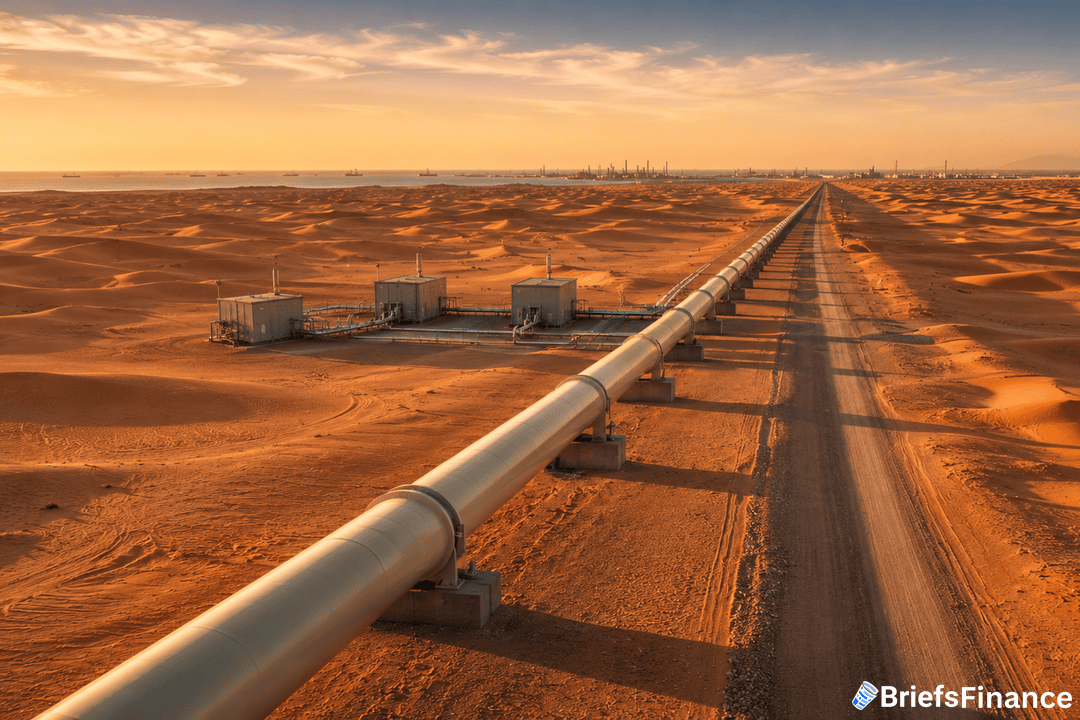
Now Gulf states will build more pipelines to ship oil around the strait, not through it. The UAE is already accelerating construction of a new West-East pipeline that bypasses Hormuz.
"There'll be other routes for energy to get out of the Persian Gulf," Wright said. "We will see a decreasing importance from the Strait of Hormuz, but not a decreasing importance of those nations' energy production and energy supply."
In plain English, the oil keeps flowing. It just stops flowing through Iran's backyard.
Two things to track.
First, China's actual purchases versus what Trump says was agreed. Beijing has not publicly confirmed any deal, so the real test is whether the volumes actually show up.
Second, the UAE's pipeline. Construction timing on Gulf-bypass projects will tell you how seriously the Gulf states are treating this as a permanent shift versus a temporary disruption.
If Wright is right, the Middle East is still the world's oil pantry. The U.S. just becomes a bigger one, and the path to market no longer runs through a single strait.
For investors, the takeaway is simple. The way oil moves around the world is shifting. The U.S. is being put at the center of it.
This is the kind of slow change that reshapes whole sectors. Not a quick trade. A quiet rewiring.
If you want to know what energy market shifts mean for your portfolio, join the investors reading Market Briefs - a quick read each weekday, plus a free investing course thrown in as a bonus.