Free NewsletterPro Login

Free Live Investors Workshop

Seats limited

Tue, Sep 29.

The dollar is losing value.

Here’s how investors can still profit.

Hosted By

Jaspreet Singh

Founder, Briefs Finance

X
Free Live Investor Workshop

The U.S. Just Lifted Some Iran Oil Sanctions

A stylized illustration of a cylindrical cup with blue arrows and lines indicating a swirling or rotational motion inside the cup.
Published Mar 22, 2026
Share:
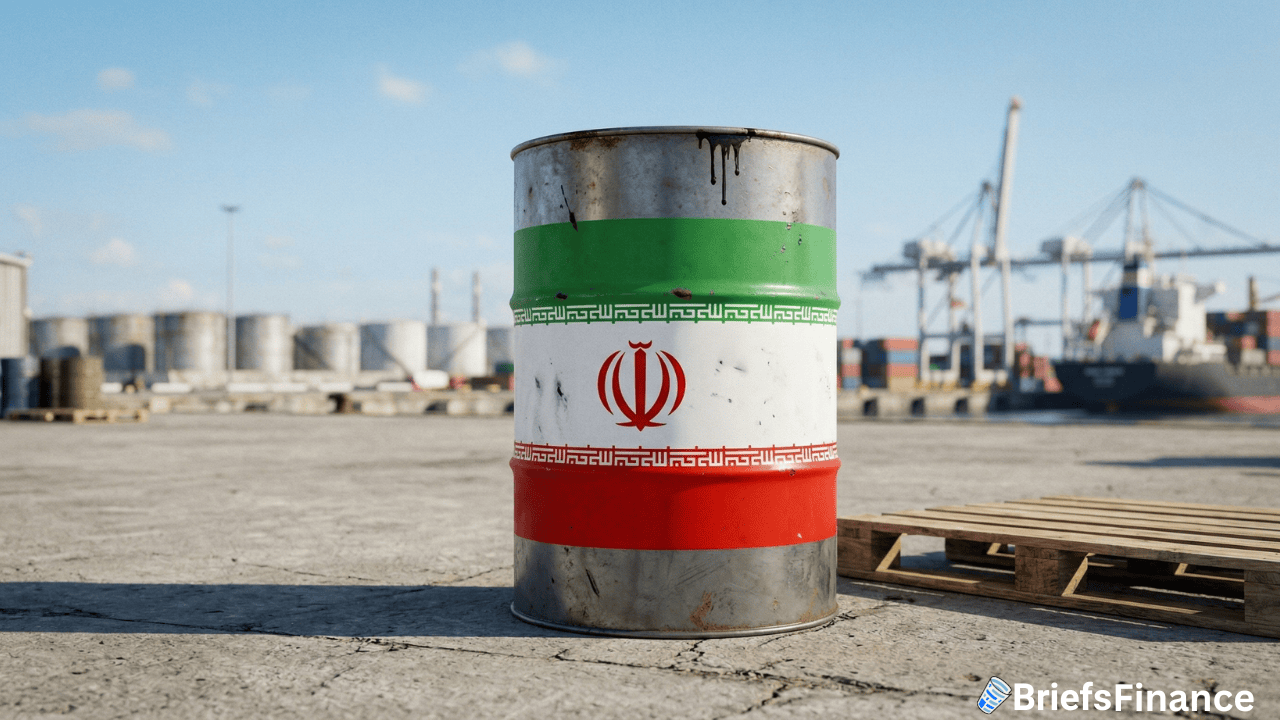
A metal oil barrel painted with the Iranian flag stands on a concrete surface in an industrial port area, hinting at the impact of U.S. sanctions, with shipping containers and a cargo ship in the background.
Summary:
  • The Treasury Department gave buyers a 30-day window to purchase roughly 140 million barrels of Iranian crude already sitting on tanker ships
  • Brent crude has blown past $110 a barrel - more than 50% higher than where it sat a year ago - as the war chokes off one of the world's most important shipping lanes
  • Critics warn the move could hand Tehran cash to fund its own defense, while supporters say it redirects cheap barrels away from China and toward global markets

The U.S. is at war with Iran. 

But plot twist: It's also telling buyers they can purchase Iranian oil - at least the barrels already floating on ships.

That contradiction landed Friday when Treasury Secretary Scott Bessent rolled out a short-term license letting companies buy Iranian crude that was loaded onto tankers before the end of Thursday. 

The window closes April 19.

It’s A Price Thing

Roughly 140 million barrels of Iranian oil are sitting on ships right now. 

Before the war, most of those barrels were headed to China at bargain prices because sanctions made other buyers too nervous to touch them.

Bessent's argument: Let other countries - India, Japan, Malaysia - compete for those barrels at full price. That puts more oil on the open market and takes away China's discount.

The catch? Iran loaded those ships. 

Why Prices Still Haven't Budged

The war has essentially shut down the Strait of Hormuz - think of it like a highway on the sea for oil.

Except this highway carries roughly 20% of the world’s oil through it.

Tanker operators won't risk the route because of Iranian attacks. 

So major producers can't get their oil out - even as Iran keeps exporting through the same channel.

The result: roughly one in every ten barrels the world uses each day has been knocked offline. 

  • That's a hole that 140 million barrels on ships can't fill for long.

The administration is throwing everything it can at the issue. 

  • A release of 172 million barrels from the country's emergency oil stockpile. 
  • Waivers that opened up domestic oil shipping to foreign-flagged vessels. 
  • A similar one-month pass on Russian oil that's already at sea.

Meanwhile, oil is still sitting near its highest levels in years.

Disclosure

Recent News

1 2 3 78

Get Market Briefs delivered to your inbox every morning for free!

No fluff. No noise. No politics. Just finance news you can read in 5 minutes.
0 Shares
Share via
Copy link