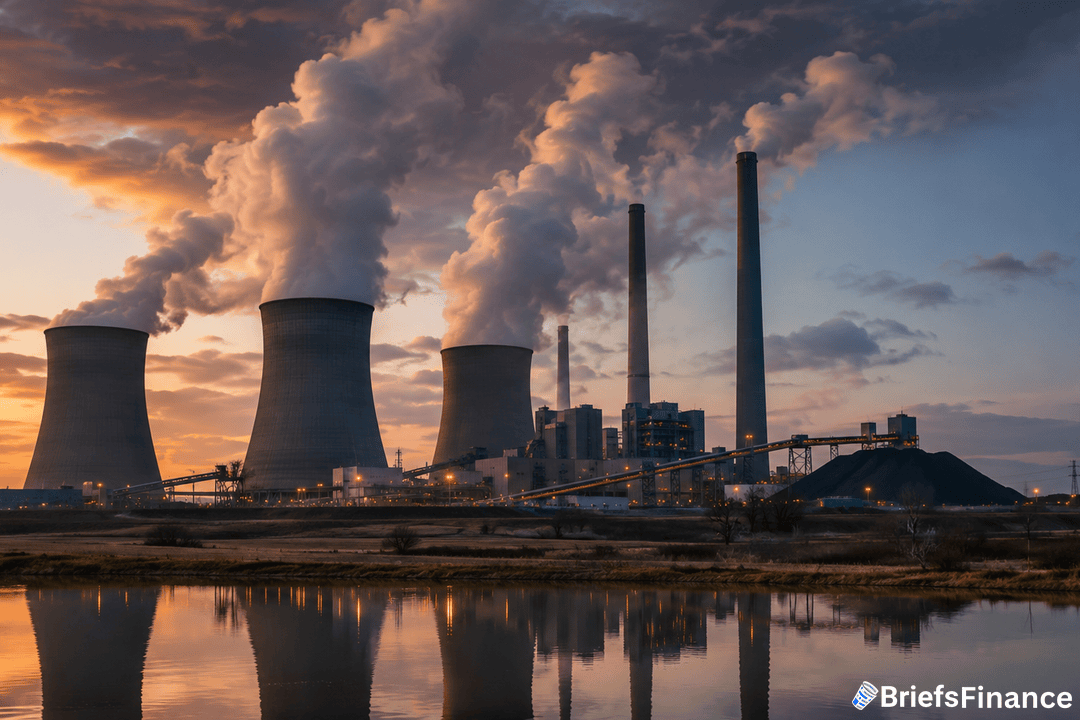
Coal has been losing the U.S. power market for 25 years, and Trump just reached for a Cold War law to try to stop the slide. The administration announced a nearly $700 million package to prop up the industry, built on a rule designed for national emergencies.
The dollars are spread across the country. More than $425 million would go to upgrading 13 existing coal-fired plants across states like West Virginia, Kentucky, and Arizona.
Another $185 million would match private money for coal projects in Alaska, Maryland, and West Virginia, while a final $75 million is earmarked for a long-stalled coal export terminal in Northern California.
The legal hook is the Defense Production Act, a law that lets a president steer industries seen as vital to national security. Using it for coal treats the fuel like a wartime resource, Fox Business reported.
We cover the energy moves that ripple into your portfolio in Market Briefs, every weekday morning, and new readers get a free investing masterclass when they sign up.
The timing isn't random, since the administration is framing coal as a way to keep the lights on as data centers and AI gobble up electricity.
The case for it is reliability. Energy Secretary Chris Wright called coal a critical source of round-the-clock power and the raw material behind steel and cement.
The case against it is math. Utilities keep choosing cheaper natural gas and renewables, which is why coal slid from more than half of U.S. electricity in 2000 to under a fifth today.
$700 million is small money against an industry this size, which makes the Defense Production Act the real lever here.
Whether a 25-year decline bends to a federal order is the open question.
For a daily read on the energy and AI stories driving the market, join the readers getting Market Briefs and grab a 45-minute investing course as a bonus.