On Tuesday, Aug. 18, 2026, President Trump said the U.S. is not negotiating with Iran and has no intention to begin. "There are no talks or conversations going on, or scheduled, with the Islamic Republic of Iran," he said.
That was a reversal of what Trump had said earlier, when he claimed negotiations were underway. Iran denied that any talks existed, and two weeks earlier Trump called those denials "duplicitous."
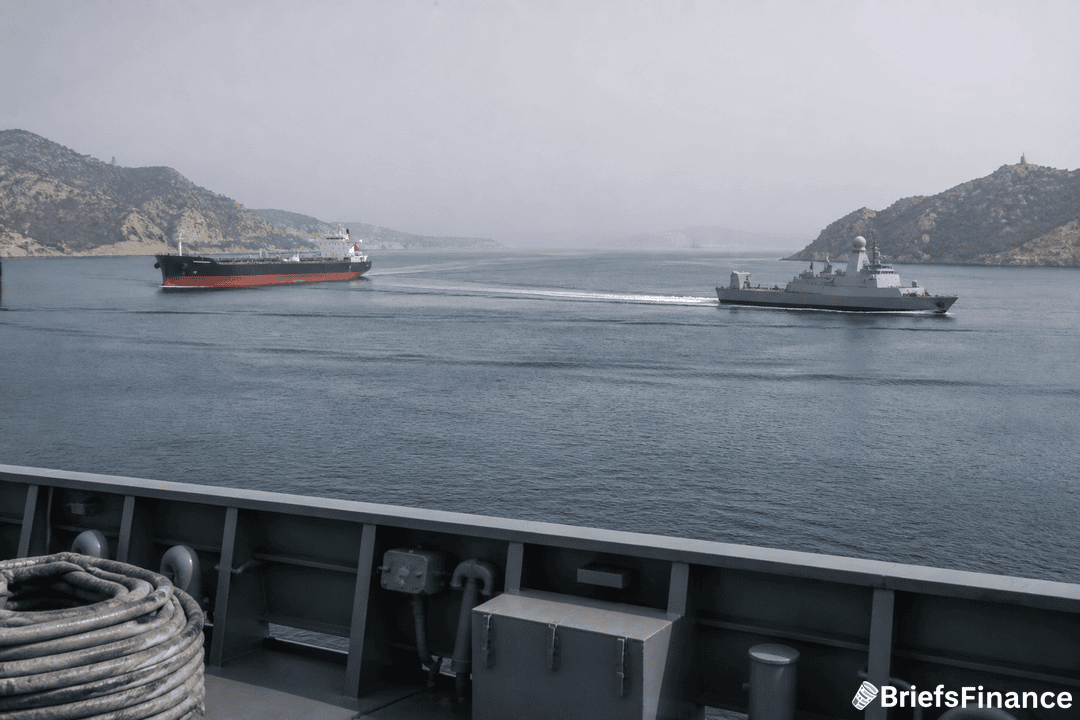
Trump also said the U.S. naval blockade of Iranian ports remains fully in force, the strait is open, and every water mine has been removed or detonated. The U.S. started a mine-clearing mission in April, but Central Command has not confirmed that claim and pointed CNBC's question to the White House.
Trump's comments came right after the 60-day ceasefire lapsed. He said Monday he would not extend it, and the truce had mostly fallen apart by then.
The pressure keeps building. The UAE said its air defenses spotted two ballistic missiles fired from Iran, with one landing outside UAE waters and the other inside UAE waters.
A projectile hit a cargo vessel in the strait Tuesday, damaging its engine room and causing one crew casualty. Omani authorities helped the remaining crew.
Shipping has nearly halted. Kpler data showed only three vessels used the strait on Sunday, a steep drop for a waterway that is economically vital.
The slowdown reaches beyond Hormuz. The Bab el-Mandeb Strait, another key route, saw 49 weekend commodity-vessel transits, down from 55 the previous week, according to Reuters.
In mid-July, Yemen's Houthi movement announced a naval blockade against Saudi Arabia. Iran's military spokesman, Ebrahim Zolfaghari, warned that ships attempting passage would find "several beautiful holes in their hulls."
Oman sits right now. Iran and Oman (the two countries that border the strait) have been discussing a commercial shipping arrangement, and Iran's foreign minister, Abbas Araghchi, confirmed Saturday that talks on a new Hormuz route are ongoing.
Trump pushed back during a Fox News interview Monday, threatening to bomb Oman if Oman interfered with U.S. operations. He said the U.S. controls the strait through its naval blockade of Iranian ports.
Marc Sievers, U.S. ambassador to Oman from 2016 to 2019, said the threat was "to get their attention more than a practical threat." He also said Oman seems to lost the support of Washington.
Sievers said U.S.-Iran diplomacy had effectively stalled, a description he called "fair." He added that the diplomatic path Washington pursued dragged on longer than needed in search of a solution that was never truly on the table.
Oil prices rose for three consecutive sessions because a fast U.S.-Iran pact seemed increasingly unlikely. But rerouted oil has kept prices below $100 an ounce, which lets Washington act.
Eurasia Group says both sides will "dig into a longer standoff." It now sees a possible deal only by the time the year ends - not September - and expects at most a limited agreement that would only partly restore traffic through Hormuz.
The clearest channel is oil. A strait that carries a large share of world oil commerce does not need to close entirely to raise fuel costs, shipping fees, and energy stocks. With both sides settling in, those prices will stay sensitive to fresh threats.
Even with a limited deal by year-end, uncertainty could keep freight insurance rates high. It would push shippers to continue taking lengthy alternative sea routes, making transits take weeks longer. Thus, value fluctuations in energy and shipping sectors may last well into 2027, beyond any headline breakthroughs.