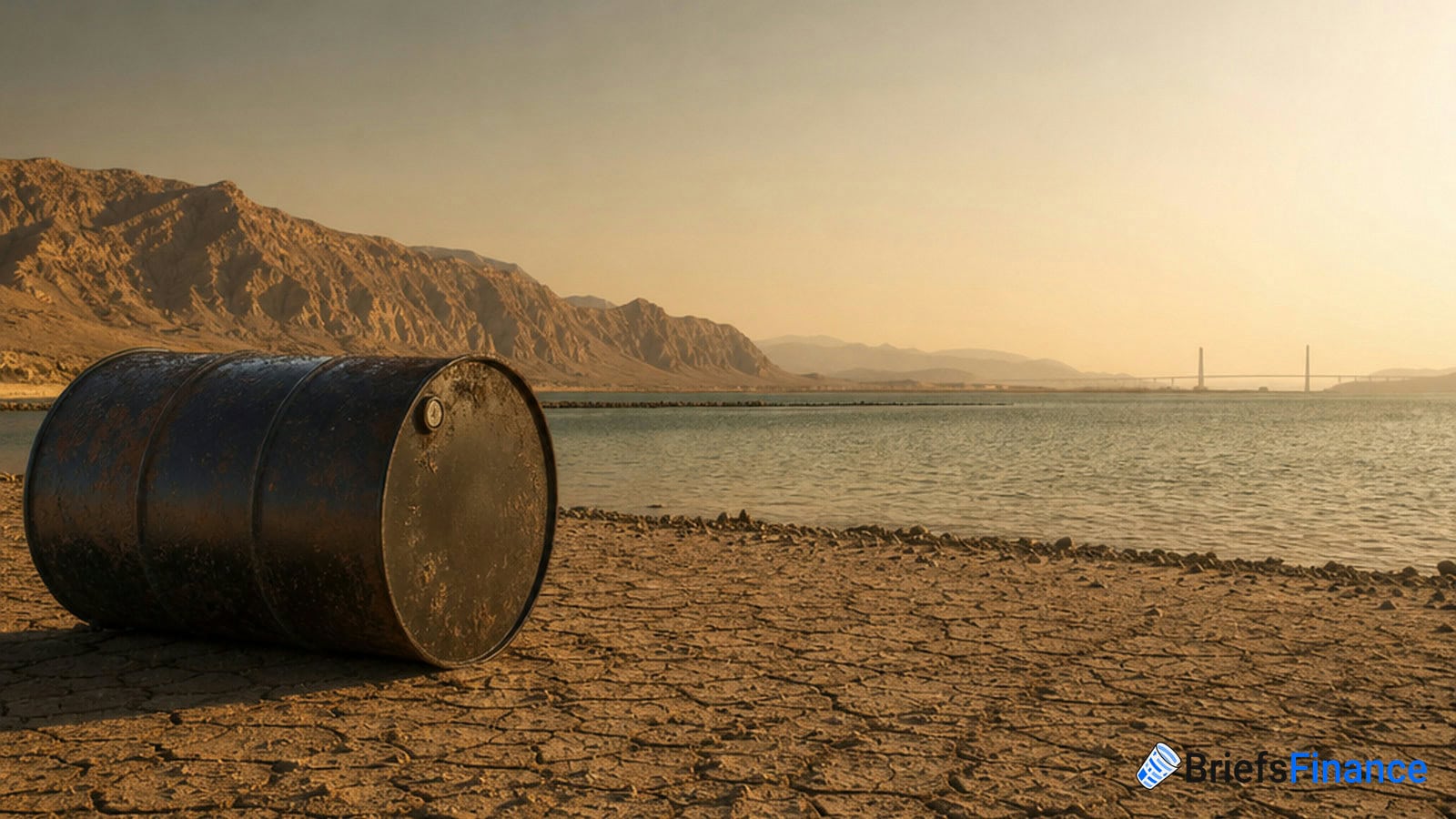
Crude prices climbed after a fresh round of attacks between the U.S. and Iran, stirring up supply concerns that had faded over weeks of quieter trading.
The move puts geopolitical risk back at the center of the oil market after traders had mostly tuned it out.
Oil is one of the quickest markets to react to anything happening in the Middle East. About a fifth of the world's oil flows through the Strait of Hormuz - a narrow shipping lane wedged between Iran and Oman.
When tensions flare, traders bid up oil to cover the chance that supply gets cut off, which means no actual disruption is needed for prices to move.
That risk premium - the extra cost baked into each barrel for "what if" moments - grew during earlier rounds of fighting and shrank as things cooled off. Now it's growing again.
Every morning, Market Briefs breaks down the moves shaking up markets in five minutes - plus you get a free investing masterclass when you join.
A geopolitical risk premium is the gap between what oil would cost based on supply and demand alone and what it costs when traders factor in conflict.
That gap can move by several dollars a barrel in a single day, which is why oil jumps on Middle East headlines even when no barrels are actually missing from the market.
The Strait of Hormuz is the pressure point. Roughly 20 million barrels of oil and petroleum products pass through it every day, heading to buyers in Asia, Europe, and the U.S., so any threat to that shipping lane shows up in the price within hours.
Two things matter from here:
If tankers slow down or reroute around the strait, prices can climb fast as buyers scramble for other supply.
If things cool off in the next few days, the move could fade as quickly as it started, with the risk premium leaking back out of the market.
Energy stocks tend to track crude closely, with big names like ExxonMobil and Chevron usually moving in the same direction as the price of oil - up when crude rises, down when it falls.
On the flip side, fuel-heavy sectors like airlines and trucking get squeezed when crude rises, since fuel is one of their biggest costs.
Refiners and pipeline operators move with crude too, though they don't move equally. Producers usually get the biggest lift when prices rise, since higher oil flows straight to their bottom line.
Oil has spent most of recent months in a tighter range than during earlier flare-ups, which makes any jump higher feel sharper than the raw numbers suggest.
Earlier Middle East flare-ups sent crude up by double digits in a few days before easing as supply kept flowing - a pattern traders are watching for again.
The market had largely tuned out geopolitical risk, and this round of strikes is pulling it back into focus.
Join 350,000+ investors reading Market Briefs every weekday morning, and grab the 45-minute investing course thrown in as a bonus.