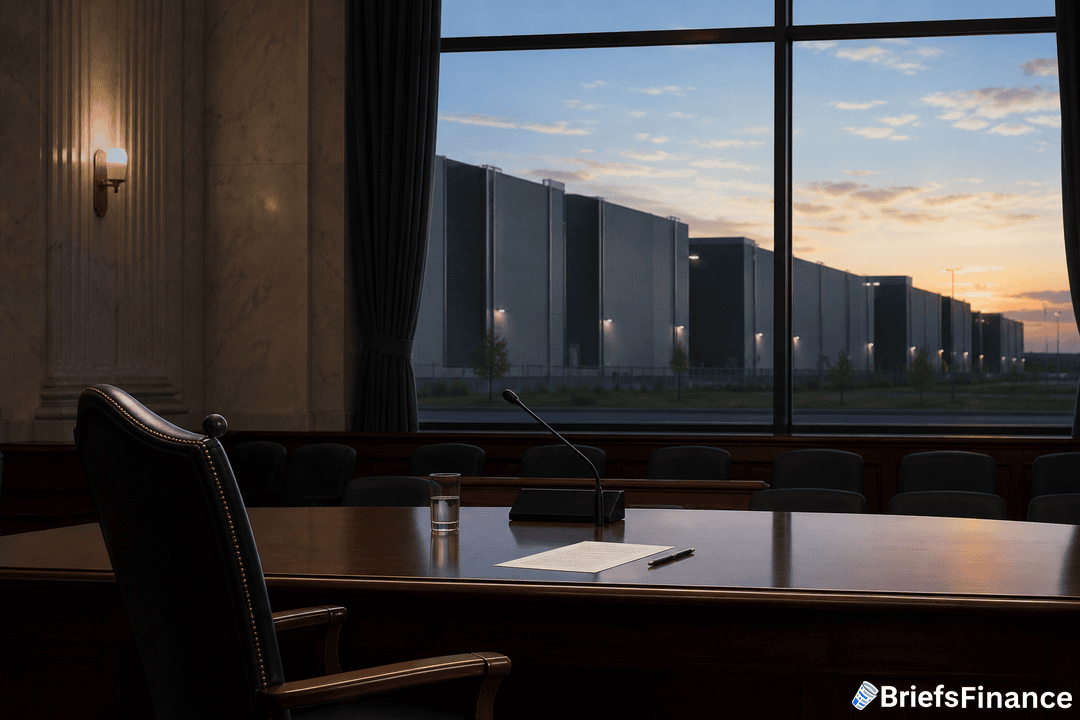
The AI boom depends on physical chips, but what companies ultimately need is the computing power those chips provide. That resource, often called compute, could one day be traded in financial markets.
The Commodity Futures Trading Commission, the U.S. regulator that oversees futures markets, wants public feedback on contracts tied to AI computing power. A futures contract is an agreement to buy or sell something later at a price set today. It is a type of derivative because its value depends on something else.
Buyers use futures to lock in costs in advance. Farmers can sell crops before harvest, airlines can lock in fuel costs, and supporters say AI developers and data centers could do the same for computing capacity.
CME Group and Intercontinental Exchange have said they intend to offer compute futures products once regulators give the go-ahead.
Locking in computing costs ahead of time could make it easier for companies to manage uncertainty. A hedge is a way to protect against sharp price movements. If a data center knows it will need a large amount of computing power next year, it could lock in a price now, similar to how a bakery buys flour in advance.
Speculators also play a role. Their trading activity provides liquidity, which makes futures contracts easier to use.
A futures market for compute would also need broad participation to succeed. Data centers, cloud providers, and AI developers are natural buyers, while investors and traders could serve as sellers. The more participants on both sides, the more reliable the price discovery process becomes. That is why regulators are paying close attention to how these contracts are designed before any launch.
Compute is not easy to standardize. The CFTC is asking how a compute futures contract would work in practice and how it would differ from derivatives the agency already regulates.
One key question is which settlement index would determine the final price when a contract expires. Oil has market grades, corn has classes, and compute would need a benchmark before trading could operate smoothly.
The comment period runs for 60 days and closes on August 19, 2026. During that time, anyone can share feedback with the CFTC.
For investors, the broader picture is that AI's buildout is becoming a commodity story. Compute is consumed by data centers, cloud providers, and AI systems. If a futures market develops, it could make the value of AI computing power more transparent.
Regulators still need to write rules, so compute futures are not trading yet. But the groundwork has begun, and clear rules could attract more market participants.
Even without trading compute futures, understanding this market offers a useful window into the AI economy.