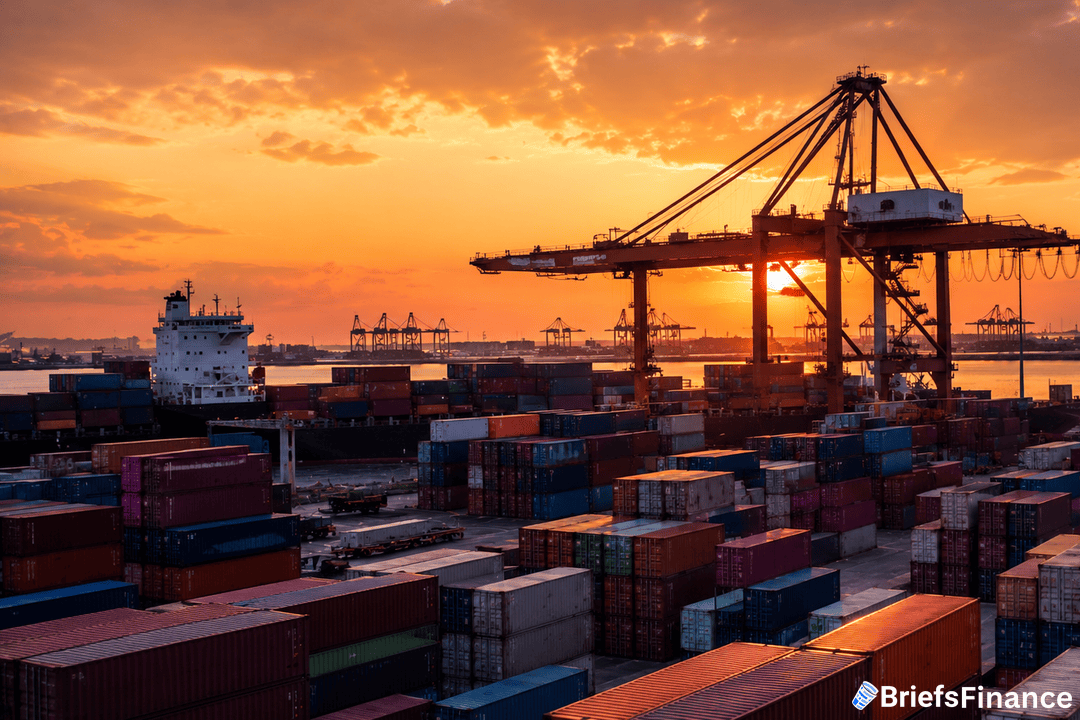
On Thursday, the Office of the US Trade Representative announced tariffs on 60 economies covering 99.4% of American imports.
The administration says these nations have not done enough to keep forced‑labor‑made goods out of American stores, though several of them publicly disagree with that reasoning.
Almost everything is covered. That is a massive net - only a tiny fraction of foreign goods will slip through without the new charge.
This is not the first time Trump has used tariffs as a weapon. Earlier this year, in February 2026, the Supreme Court ruled that his previous round of emergency‑powers tariffs were unlawful. Those were set to expire on July 24, 2026 anyway, but the court's decision forced the administration to find a new legal footing. The forced‑labor argument is that footing.
Get the market news that matters in a five-minute read with Market Briefs, our free daily newsletter
Not everyone believes the official story. The analysis from the Peterson Institute for International Economics stated that the probe is not about labor standards; instead, it serves as a way to shift America's import ban on Chinese products and to rebuild the tariff system that the Supreme Court had invalidated.
Brazil is a good example of how layered this gets. Earlier this month, the US already put a separate 25% Section 301 tariff on Brazilian goods. The additional 12.5% brings Brazil's total tariff to 37.5%, a figure approaching the 50% level the court had previously declared illegal.
Most trading partners are choosing their words carefully.
Australian Trade Minister Don Farrell did not mince his. He said the tariffs are "unjustified, inconsistent with our free trade agreement, and should be removed." Brazil's President Luiz Inácio Lula da Silva called them arbitrary and unjustified but said he remained open to negotiations, adding, "Brazil would seek other markets if it couldn't sell into the U.S." Canada's trade minister, Dominic LeBlanc, said the move "is not unexpected" and that Canada would "continue engaging constructively" in the coming weeks.
The response from Asia has been more muted. Tianchen Xu, a senior economist from the Economist Intelligence Unit, said to CNBC that the effect on large Asian nations will probably be small thanks to exemptions, which cover a wide range of electronics, from consumer gadgets to semiconductors. New Zealand, for example, has about 30% of its U.S.‑bound exports still covered by exemptions - items like beef and kiwifruit that already had special treatment. Chile plans to ask for exclusions on its key export products as well.
No major trading partner has fired back with retaliatory tariffs yet. That might change, but for now the tone is "let's talk" rather than "let's fight."
Join Market Briefs, our free daily newsletter, for a quick daily rundown of the markets