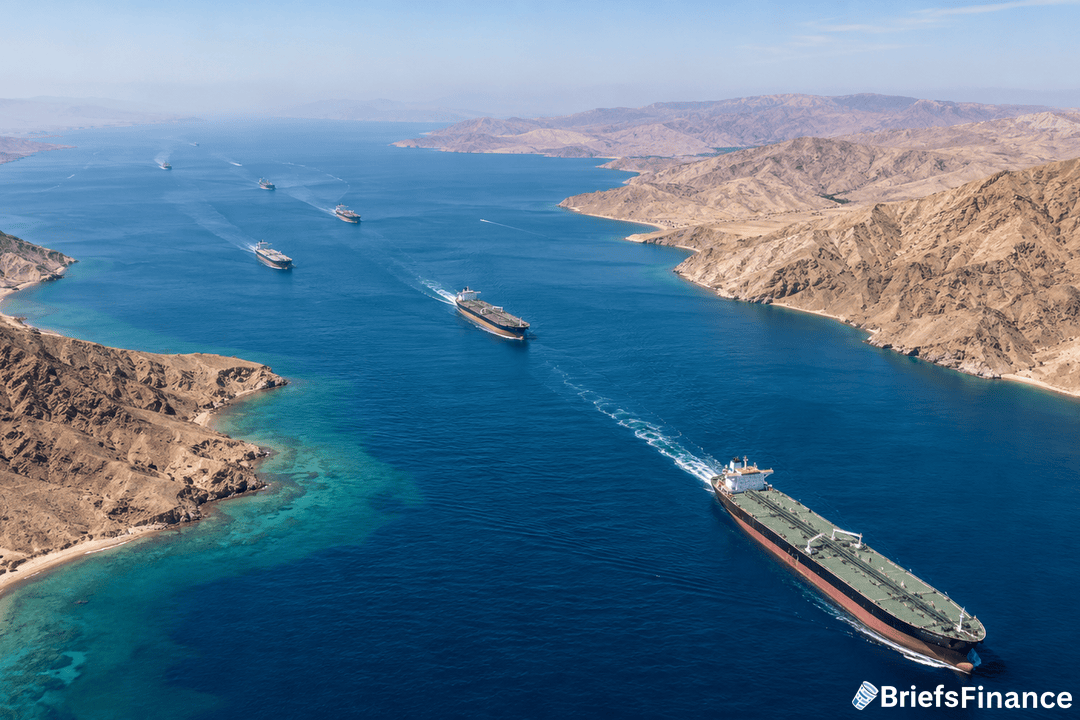
The world's busiest oil gateway is reopening. Iran's okay was not required.
Energy Secretary Chris Wright shared a big number Friday. He spoke at an energy summit in Houston.
About 7 million barrels of oil and fuel now move through Hormuz each day. That's about half of what got stuck when the war shut the strait in late February.
Back then, about 20 million barrels a day were trapped. A few million found other ports.
That still left about 14 million stranded behind the blockade. "We're just going to restore flows ourselves," Wright said.
The U.S. will reopen the strait with or without Iran's help, he added.
The strait sits between Iran and Oman. It's the only sea route out of the Gulf.
Oil prices flow straight into your money. They move gas stocks, airlines, and the oil futures that set the price at the pump.
We track every move in Market Briefs - five minutes a day, with a free investing crash course when you join.
More oil moving means cheaper oil. So prices kept sliding on the news.
Futures fell 3.4% in London. They dipped below $86 a barrel, the lowest since the war's first weeks.
That extends a long slide. Prices are now down about 45% from their wartime peak above $126 in late April.
One Houston investor, Dan Pickering, said 7 million barrels was "a bigger number than I think people had been expecting." He said it helps explain why prices have run lower than many expected.
Hormuz is like the front door to the world's oil. Jam it and everyone backs up.
Clear it and the line starts moving again. The strait normally carries about a fifth of the world's oil.
Cheaper oil cools inflation too. That gives the Fed more room to think about rate cuts.
Prices at the pump usually follow within weeks.
Chevron's CEO pushed back. Mike Wirth said flows are "probably not quite that much."
He warned against trusting truce talk until a deal is signed. Iran has a long history as a patient, hard negotiator, he noted.
Wright wants the U.S. emergency oil stash filled back up. He also ruled out any ban on exports.
The reserve is the country's backup oil supply for emergencies. Traders are split on who to believe.
With the war cooling, some traders are watching whether safe-haven gold gives back its war-time gains.
The gap between the government's 7 million and the industry's quieter guess is the number to track. Whoever is right sets the floor for prices.
A senior Iranian official hinted overnight that a deal is likely. Both sides could meet at next week's G7 summit.
A signed deal could push oil lower still. A breakdown could send it back up.
If you want this read on the market every morning, join 350,000+ investors reading Market Briefs and get a 45-minute course on how to invest.