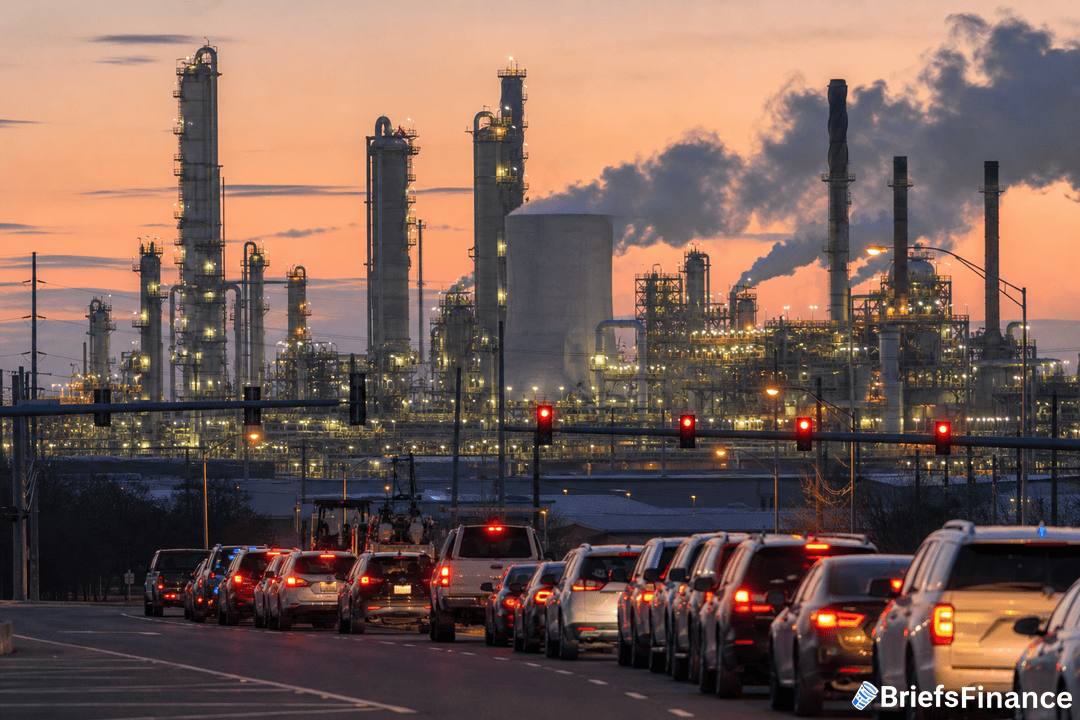
Your gas station might not look different yet, but something unusual is happening behind the scenes at American refineries. They are running harder than they have in years.
The Energy Information Administration reported that American fuelmakers processed 17.4 million barrels of crude daily during the most recent week. That is the fastest pace since September 2019, and it beat the previous wartime peak from late July in the US-Iran conflict.
The reason is simple: the world needs fuel, and the US is one of the few places still able to supply it. With global supply under pressure, the US has become the last-resort fuel supplier for world markets.
Not all fuel is created equal, and right now diesel is the star of the show. Producer margins for diesel are sitting above $100 a barrel, which is a fancy way of saying refiners can charge a lot more than it costs them to make it.
That kind of profit potential changes behavior. Refiners are not just running their plants fast; they are running them smart, chasing the products that pay the bills. Gasoline output rose last week, though it still sits below the seasonal average. Propane, propylene, and residual fuel oil output also inched up as refiners chased every available revenue stream.
Here is a number worth sitting with for a second: 18. Not one week of good weather or a holiday spike, but nearly four and a half months of sustained production.
That consistency tells you something about the economy. People are still flying, goods are still moving, and the machinery of modern life is still humming along. Airlines and shipping companies may grumble about prices, but they are not cutting back. As long as demand holds, expect US refineries to keep pushing their equipment to the limit.
The same forces driving these refineries are showing up in your monthly bills, even if the connection is not always obvious. Fuel prices at the pump, the cost of shipping a package, and even the price of groceries all carry a little piece of these refinery margins inside them.
For investors, the takeaway is about the companies doing the refining here at home. When American refiners run at full tilt for months on end, the cash flow can pile up fast. That can mean bigger dividends, stock buybacks, or money to reinvest in the business.
The catch is that fuel markets are famously unpredictable. A peace deal, a recession, or a warm winter could cool demand quickly, and today's record pace could slow as fast as it arrived.
For now, though, the message from the data is clear: American refineries are the world's safety valve, and they are wide open.