Venezuela is weighing whether to leave the Organization of the Petroleum Exporting Countries (OPEC) after six decades of membership, according to sources close to the discussions. The move would represent a seismic shift for one of the cartel's founding nations. These deliberations come alongside negotiations between Venezuelan and U.S. officials, though no final choice has been reached.
The U.S. has dictated Venezuela's oil exports since sanctions were imposed under the Trump administration, and abandoning OPEC could signal Caracas's realignment of partnerships. With the UAE's recent departure already testing the group's cohesion, Venezuela's exit might further erode OPEC's sway over global crude prices.
Although Venezuela's crude output has seen modest recovery, it remains a fraction of its former levels due to prolonged economic crisis and U.S. restrictions. While its departure may not cause immediate market upheaval, it could expose cracks in the Saudi-led alliance.
Some in Washington view Venezuela's potential exit as strategically advantageous. A source familiar with U.S. discussions said, "Aligning with Caracas could loosen OPEC's stranglehold on oil markets." Exiting would also release Venezuela from OPEC's production caps, enabling it to ramp up output and court foreign investors.
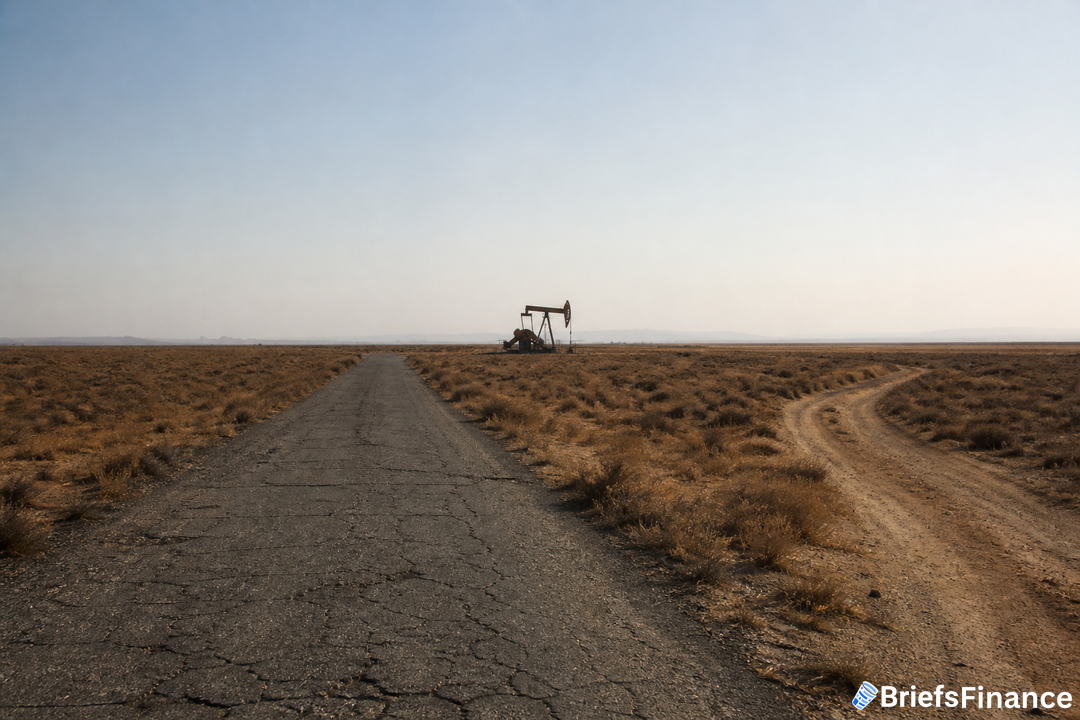
Once a powerhouse, Venezuela's oil industry has deteriorated after years of government mismanagement and international sanctions. Production has dropped to less than half of its 2013 peak, with refineries barely functioning and critical infrastructure in decay. The U.S. has conditionally relaxed sanctions to push for political concessions and secure access to Venezuela's vast reserves.
Market shifts demand smart strategies - learn how with our free Always Be Buying E-Book for steady wealth building
Chronic underfunding and operational failures have left the industry ill-equipped for a rapid turnaround.
The White House is reportedly nearing a deal to acquire a significant stake in Venezuela's oil assets, as earlier covered by Bloomberg and Axios. Leaving OPEC could streamline partnerships with global energy firms aiming to rehabilitate production.
No official statement has been issued, and Venezuela's Information Ministry did not respond to requests for comment.
Venezuela joined OPEC in 1960 alongside Saudi Arabia, Iran, Iraq, and Kuwait, forming the backbone of the cartel. For decades, it was a key player in shaping global oil policy. However, its influence waned as political and economic instability took hold.
The country's current production - around 1.16 million barrels per day - is a shadow of its 1998 peak of 3.5 million. If it departs, OPEC would lose another member at a time when its market control is increasingly challenged by U.S. shale and renewable energy growth.