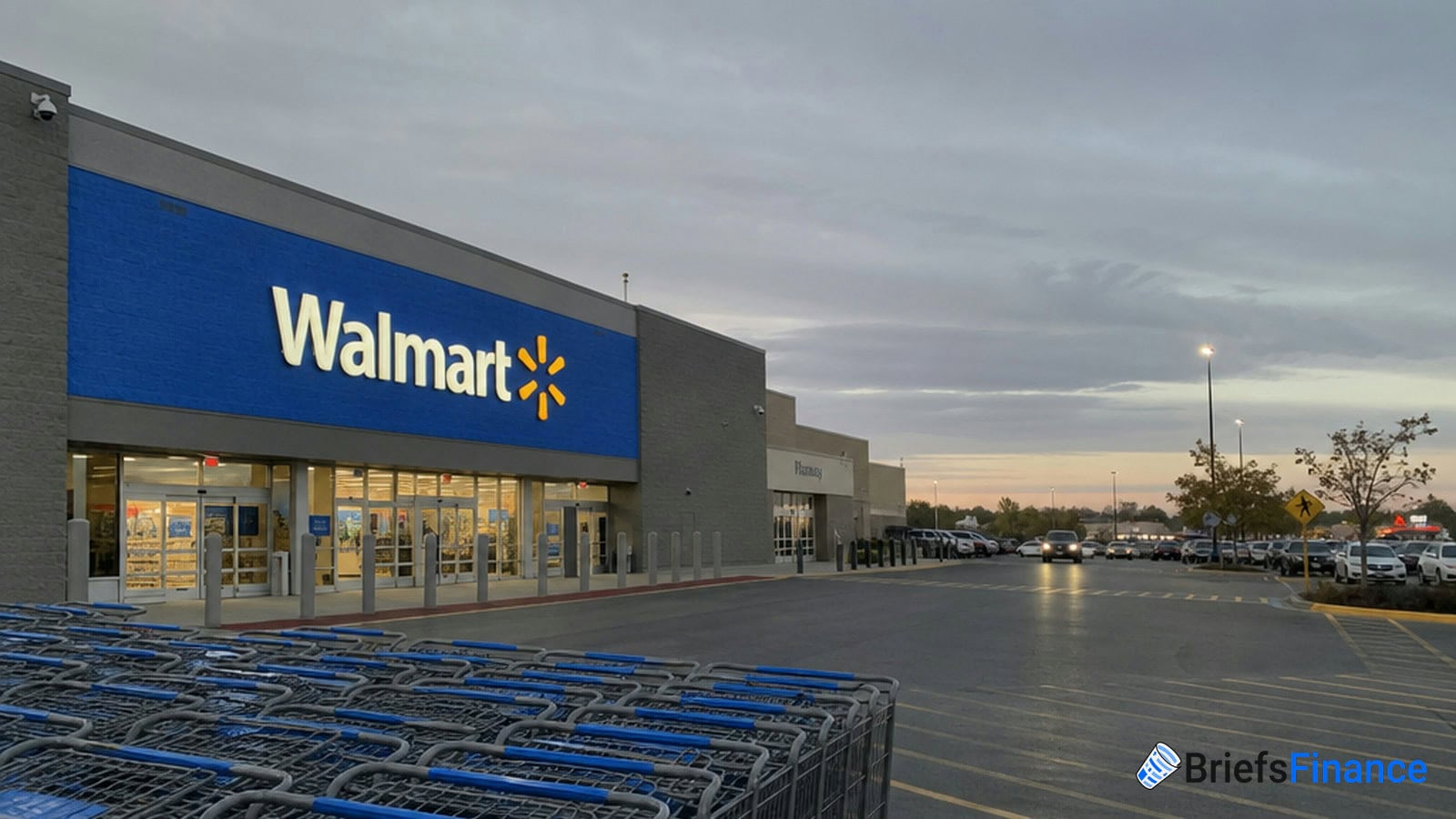
Walmart sold more than Wall Street expected last quarter, but the stock is sliding anyway.
The reason sits one line down in the earnings report - the part that shows how much money the business actually kept after paying to run it.
For the largest retailer in the country, that number doubles as a read on the health of the American shopper.
Revenue came in 2% above forecasts, while earnings per share hit the number on the nose.
Both numbers would normally be enough to lift a stock, but operating income - the cash left over after Walmart pays for stores, staff, and stocking shelves - came in 1% short.
That line tells investors whether each dollar of sales is leaving more or less behind than it used to, and this quarter it was less.
Retail runs on thin margins to begin with, and a 1% miss at Walmart's scale adds up to real money and a clear signal that costs are climbing faster than prices.
Food costs have been a wild card for the whole industry, and Walmart takes more of the hit than smaller chains because it works to hold prices down to defend its everyday-low-price brand.
We unpack what's actually moving stocks like this every weekday in Market Briefs - five minutes a day, with a free 45-minute investing masterclass when you sign up.
About 60-65% of every dollar Walmart rings up comes from groceries, the corner of retail Amazon has spent a decade trying to crack with Whole Foods, Amazon Fresh, and a string of pilots that never scaled.
That foot traffic matters because customers come for milk and leave with a TV.
Groceries are low margin on their own, but they bring in the visits that power everything else on the shelves - from electronics to apparel to the pharmacy aisle.
That engine has held up even as online shopping reshaped retail, with Walmart's web sales growing alongside store traffic instead of replacing it.
As long as that engine is running, a one-quarter wobble in profit looks more like a speed bump than a turning point.
The stock is now testing its 200-day moving average - the price line traders watch to gauge whether a stock's bigger trend is still pointing up.
Hold the line, and this quarter gets forgotten. Break it, and the story changes.
Stocks that fall below the 200-day line often see rules-based funds step out of the position, which can speed up the slide.
Walmart's grocery lead isn't the problem - operating margin is.
The next earnings print will tell investors whether this was a one-quarter cost spike or the start of something stickier.
If you want this kind of breakdown every morning, join 350,000+ investors reading Market Briefs - a 45-minute investing course comes with it as a bonus.