One day after its worst session ever, South Korea's stock market staged one of its biggest comebacks ever.
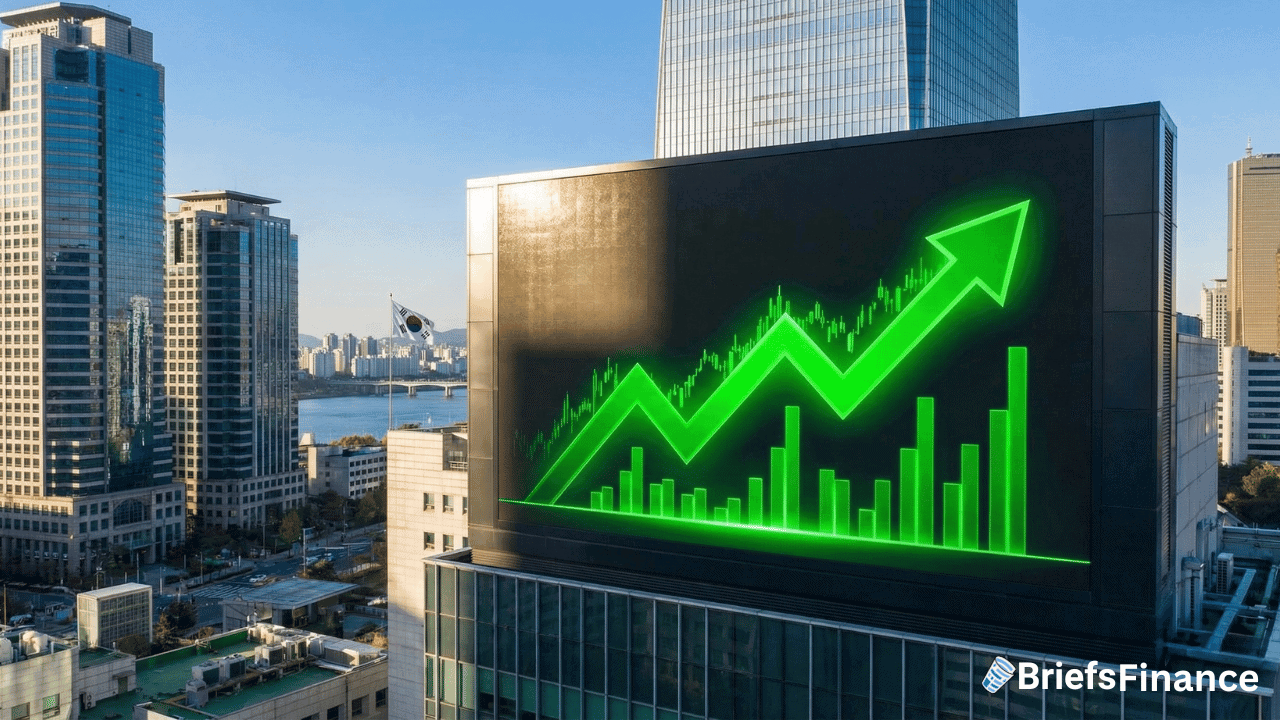
The KOSPI closed up 9.6% Thursday at 5,583.9 — gaining back most of Wednesday's 12% collapse in a single session. The small-cap Kosdaq did even better, jumping 14.1%. Trading was briefly halted after the index surged so fast it triggered a buy-side circuit breaker — the same market safeguard that tripped on the way down just 24 hours earlier.
The rally was the second-largest single-day gain in the index's history, behind only October 2008.
Two things changed overnight. First, the New York Times reported that Iran's Ministry of Intelligence had signaled a willingness to talk with Washington — a small but meaningful sign the conflict might not escalate further. Second, U.S. stocks closed higher Wednesday evening as oil prices stopped spiking, calming nerves globally.
Bargain hunters piled in fast. Retail investors in Seoul bought a net 1.79 trillion won worth of shares in a single session. Samsung Electronics jumped 11.3%. SK Hynix — the chipmaker at the center of Korea's AI boom — surged 10.8%. Those two stocks alone make up nearly half the entire index.
South Korea's president also activated the country's emergency market stabilization fund, worth $68.5 billion, to help calm volatility.
The KOSPI is still down roughly 10% from where it started the week. CLSA noted that valuations are at the highest level in the MSCI Korea index's 30-year history, and the market remains tightly linked to U.S. tech stocks — which are looking stretched. Oil is still elevated. The Iran conflict has no resolution in sight.
JPMorgan analyst Iqbal Rasid said long-term demand for memory chips remains strong, which keeps the fundamental case for Korean stocks intact. But a bounce after a historic crash isn't the same as the all-clear.
The next move depends almost entirely on what oil does next.