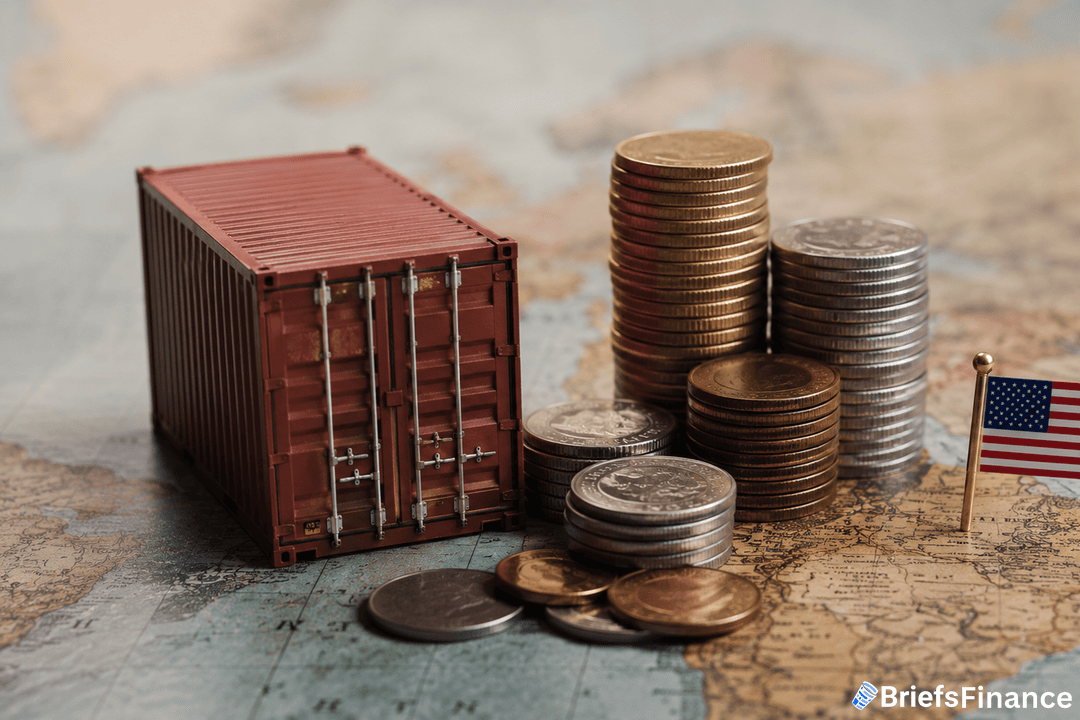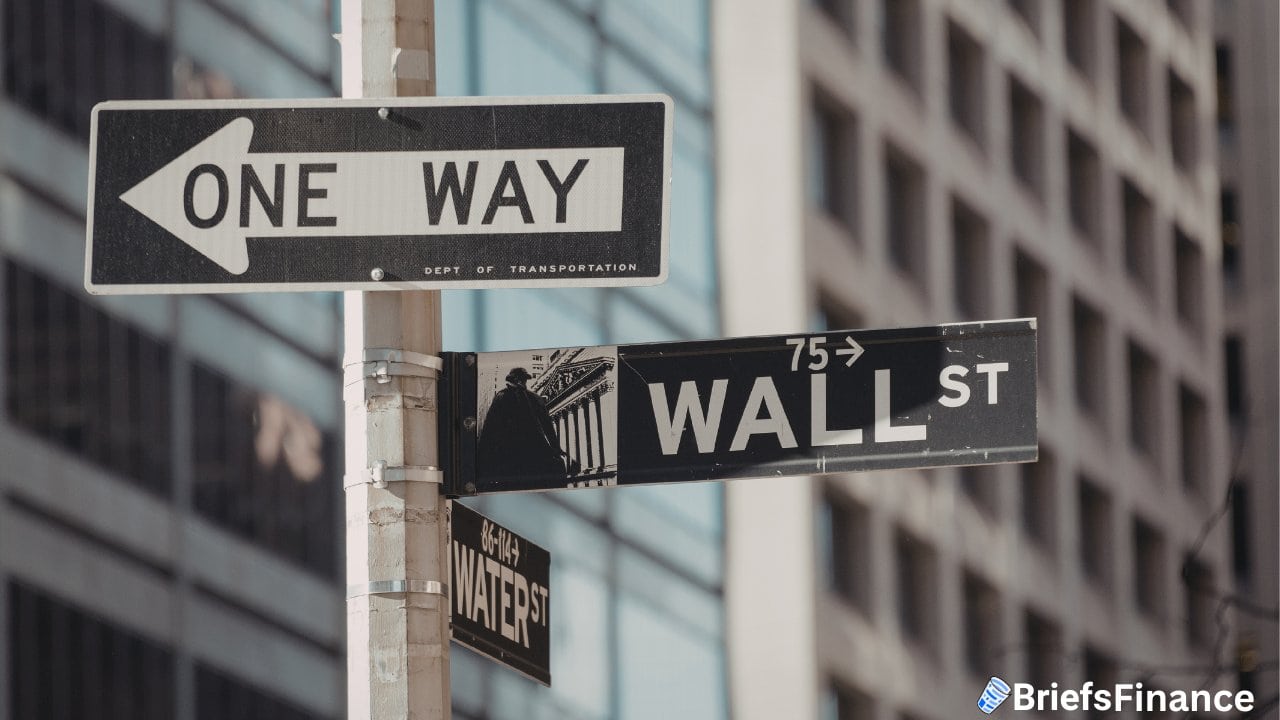
In 2025, President Trump announced what he called reciprocal tariffs. Hundreds of countries, including China and Brazil, would face extra fees on goods coming into the U.S. China was hit with over 100% at one point.
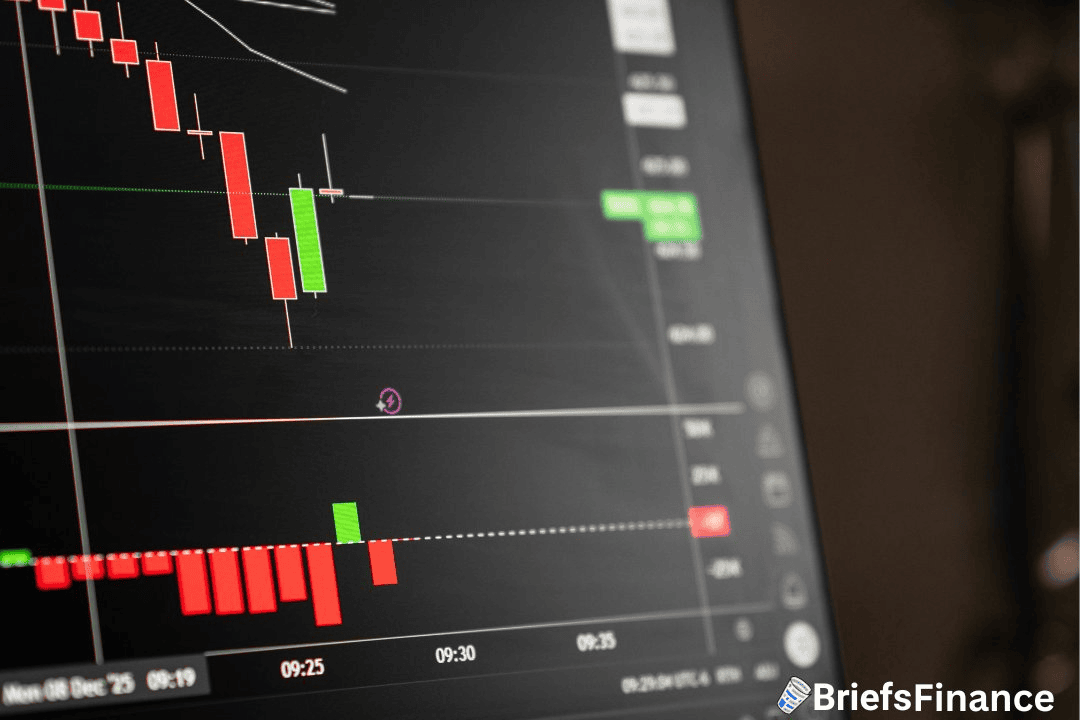
Markets did not take it well. In one trading session, the S&P 500 dropped over 3% - that's trillions of dollars in market value gone in hours. The Nasdaq, which is heavy with tech companies, entered bear market territory.
Tariffs are one of the five Market Shifts we cover in our Zero to Pro program. We call them a Government Shift, because policy moves like this can move money fast.
For the daily filter on what tariffs (and other big news) actually mean for stocks, subscribe to Market Briefs. It's our free daily newsletter that breaks down the biggest market stories every morning. Subscribe free here.
What Tariffs Are and Why They Move Stocks
A tariff is a tax on a product imported from another country. If a tariff is 100%, the cost of that product doubles when it crosses the border.
Take Apple as an example. They manufacture a huge portion of iPhones in China. A 100% tariff means every iPhone that costs $500 to manufacture and ship suddenly has another $500 added on top. That's a massive hit to profit margins.
Apple now has three choices. Eat the cost (which crushes margins). Raise prices for customers (which hurts demand). Move manufacturing somewhere else (which takes years and billions of dollars). None of them are easy or quick.
Now multiply that across thousands of companies. Tech, retail, automakers, electronics - any business that imports parts or finished goods from a tariffed country gets hit. That's why the market sells off fast on tariff news.
Why Stock Prices Drop on Tariff Announcements
When tariffs jump, investors can't accurately price the risk. How long will the tariffs last? Will they get rolled back in 90 days? Which industries get hit hardest? Will other countries hit back with their own tariffs?
That uncertainty triggers selling. Investors don't like uncertainty, so they reduce risk by selling stocks. The selling becomes self-reinforcing as prices fall and more investors panic. (This is exactly the kind of moment where the psychology of market crashes takes over.)
Tech stocks got hammered after the 2025 announcement. Big tech stocks lost serious value in days. The Nasdaq entered bear market territory.
But here's the question smart investors ask: did Apple's products suddenly become 20% worse? Did Microsoft's cloud business fall apart? No - the market was just pricing in fear of what might happen next. Companies with strong fundamentals were temporarily on sale because of macroeconomic fears, not because of any real problem with the businesses themselves. (That's the core idea behind value investing - buying quality companies when they go on sale.)
How Tariffs Create Ripple Effects Across Industries
Tariffs don't just hit the company that pays them. They send shockwaves through entire supply chains.
Let's break down a real example. Say sugar prices spike by 50% because of bad harvests in Brazil, which produces about 20% of the world's sugar. How does this ripple through the economy?
For Coca-Cola and Pepsi, sugar is one of their biggest input costs. A 50% price increase could cost them hundreds of millions of dollars in additional expenses. They have two choices: absorb the cost and accept lower profit margins, or raise prices and risk losing customers.
Both Coke and Pepsi have strong brands, so they typically pass price increases along. A can of Coke might go from $1.50 to $1.75. But that's not the end of it.
How Tariffs Hit Retailers Like Kroger and Albertsons
When Coca-Cola and Pepsi raise prices, grocery stores like Kroger and Albertsons have to make their own decision. Pass the cost to customers? Absorb some of it to stay competitive? Or use the moment to push higher-margin store brands?
Grocery stores have razor-thin profit margins, often just 1% to 3%. They make money on volume, not margin per item. So they usually pass most price increases to customers - but they also use the moment as a merchandising opportunity.
Kroger might put its private-label cola on sale right next to Coca-Cola, which is now more expensive. The Kroger brand might have a 40% margin compared to 15% for Coke. If even 10% of customers switch, the retailer makes more money even if total soda sales decline.
How Tariffs Affect Shipping Companies
Shipping companies like FedEx and CSX get hit too. CSX runs freight rail, which is energy-efficient compared to trucks. When fuel prices rise, CSX gets a relative advantage.
FedEx has both ground (trucks) and air shipping, so they're hit hard by fuel costs. They have fuel surcharges built into contracts, so they can pass some costs to customers. But the bigger question is whether businesses and consumers ship less when shipping costs rise.
These ripple effects happen in every supply chain. As an investor, your job is to map them out.
Where Tariff Money Actually Goes
Tariffs don't just destroy value. They redirect it.
The White House reported around $2 trillion in new investments came into the U.S. partly because of tariffs. The goal was to make importing more expensive, so it would make sense to manufacture in the U.S. instead.
That $2 trillion has to land somewhere. Warehouses, offices, data centers, manufacturing complexes. Investors who follow the money can find opportunities in those areas. Whether tariffs work as intended or not, that capital is moving.
Companies that already manufacture inside the U.S. get a relative advantage. Companies with deep supply chains in tariffed countries get squeezed. Domestic suppliers that compete with imports may suddenly have pricing power they didn't have before.
Identifying Stock Market Winners and Losers in a Tariff Environment
For every loser in a trade war, there's usually a winner. The trick is mapping out who's exposed and who's protected.
Ask three questions for any stock you own:
Where Does This Company Manufacture?
A company that builds everything in the U.S. is much less exposed to tariffs than one that builds in China or Mexico. Check the 10-K - companies often disclose their manufacturing footprint in the risk factors section. (Public companies are required to file these reports, which is one of the key differences between public and private companies.)
Can the Company Pass Costs to Customers?
Strong brands with pricing power - like Coca-Cola, Pepsi, Apple, Nike - can usually pass at least some tariff costs through to consumers. Smaller, undifferentiated companies often can't. (This is part of what defines a strong moat.)
What Are the Competitors Doing?
If your company's competitors are also hit, the pricing power is collective - everyone raises prices together. If only your company is hit, customers may switch to a cheaper alternative.
Tariff-Driven Investing Opportunities
Value investors saw real opportunities in 2025 because some quality companies were temporarily on sale due to tariff fears - not because of fundamental problems with the business.
This is a recurring pattern. In March 2020, the S&P 500 fell 34% in a few weeks. Many high-quality companies were temporarily cheap. Investors with cash on hand built positions that paid off enormously over the next few years. (Investing during a recession follows the exact same playbook.)
Same thing happened with solar stocks in 2025. When new tax legislation threatened clean energy tax credits, solar companies plummeted. First Solar, SunPower, and others saw stock prices crater. Smart value investors asked: "What's the actual long-term impact? Is solar energy going to stop being relevant? Are people going to stop wanting clean energy?"
For some, this was an opportunity to buy quality solar companies at discounted prices, betting the long-term renewable trend would continue regardless of short-term political headwinds. (For more on broader market drops, see our breakdown of stock market corrections.)
Not every crashed stock is a buying opportunity. Sometimes stocks go down for very good reasons. But tariff selloffs often punish strong companies along with weak ones.
What Tariffs Mean for Your Portfolio
Don't react to headlines. React to data.
When tariffs hit, take a few hours and walk through your portfolio. For each stock, figure out where they manufacture and where they sell. Read their latest 10-Q for management's comments on tariffs. Most CEOs address the topic directly in their quarterly remarks. (Not sure how to read one? Our breakdown of how to evaluate a company's financial health walks you through the steps.)
If a company you own has high exposure to tariffed countries and weak pricing power, that's a yellow flag. If a company you own benefits from domestic manufacturing or has a brand that lets it raise prices, the tariff could actually help long-term.
Diversification matters more in a tariff environment. So does cash on the sidelines. The investors who do well are the ones who can keep their cool while everyone else panics. (Inflation often gets worse during a tariff shock too, so it's worth understanding both at once.)
How to Track Tariff News Without Panicking
Pick three stocks you own. For each one, figure out tariff exposure. Then check their latest 10-Q for management's comments.
Set up a simple watchlist of high-quality companies you'd buy at a discount. When tariff fear creates the discount, you'll be ready - just like the smart money does each year with its best stocks to buy list.
Tariffs are just one chapter in the daily story of markets. Subscribe to Market Briefs - our free daily newsletter - to stay on top of the rest in plain English every morning.