The Iran war that started in February 2026 has blocked much ship traffic through the Strait of Hormuz. For Iraq, that chokepoint became impassable for exporting vessels. That is a huge hit for a nation that depends on oil revenue.
So Iraq needs to reduce its reliance on the Persian Gulf chokepoint. Fast.
Chevron sees an opening. The American energy major aims to grow its presence in the region, and Iraq hopes to draw foreign capital, especially from the United States, to boost its output.
The deals cover two specific assets: the West Qurna-2 oil field and the Nasiriyah field. West Qurna-2 alone produces about 460,000 barrels a day. That field is entirely held by government-controlled firms following U.S. sanctions imposed on Russian company Lukoil in 2025. Nasiriyah, while a smaller venture, is believed to contain significant exploration potential.
Get the market news that matters in a five-minute read with Market Briefs, our free daily newsletter
The most interesting piece of this puzzle is not just the fields themselves. It is the pipeline.
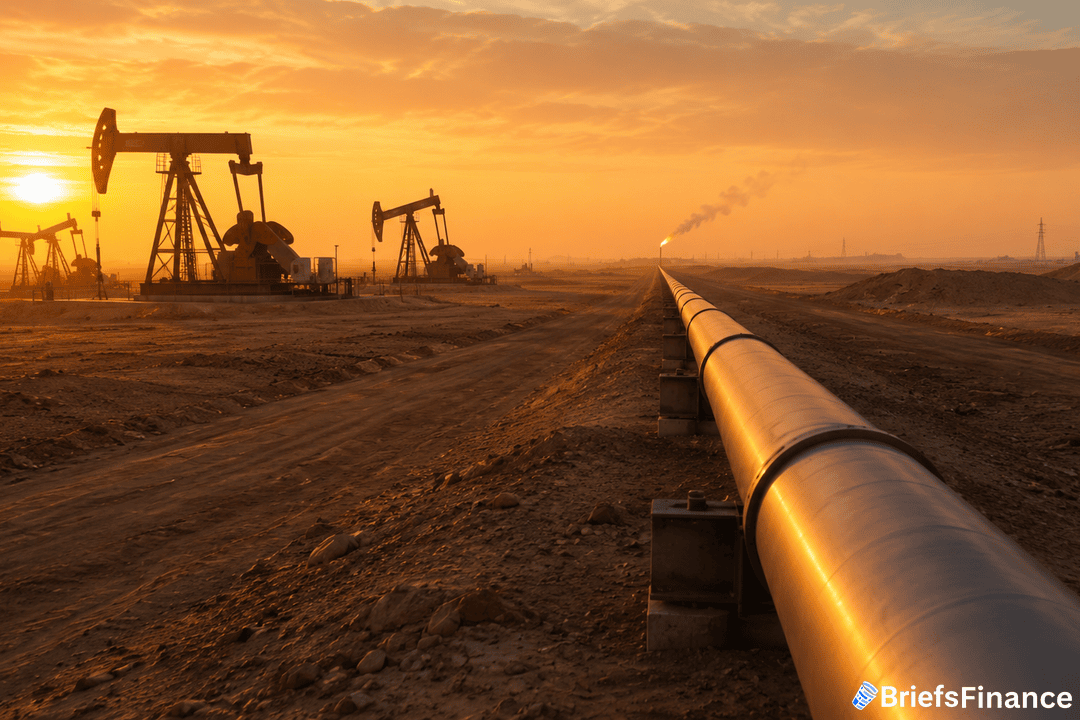
Chevron belongs to a group of American and global firms studying the feasibility of constructing a pipeline that would allow Iraq to ship crude without using the Strait of Hormuz. The company wants to guarantee it can transport shipments to the Mediterranean.
If it gets built, Iraq could export oil without ever touching the Strait of Hormuz. That is a big deal for a country that just learned how fragile its only export path really is.
A senior Chevron executive noted that engineering assessments are still needed for the two fields and the pipeline, and commercial conditions remain far from finalized. The pipeline runs through Syria.
In April, Trump supported Al-Zaidi's candidacy for prime minister, viewing his chief opponent as overly aligned with Tehran. Washington has voiced optimism that Al-Zaidi will curb the influence of Iran-aligned armed groups in Iraq and simultaneously expand opportunities for U.S. firms in the nation's oil industry.
Chevron's upstream president Clay Neff remarked in a statement: "We appreciate the chance to meet with Iraqi leaders and talk about how our expertise in building large oil and gas projects throughout the world can support Iraq as it further develops its abundant energy resources."
The potential pipeline deal comes as Iraq seeks to diversify its export routes following the disruption caused by the Iran war. With Chevron's involvement, the pipeline could also strengthen U.S. influence in Iraq's energy sector, aligning with Washington's goal of reducing Tehran's sway.
Join Market Briefs, our free daily newsletter, for a quick daily rundown of the markets