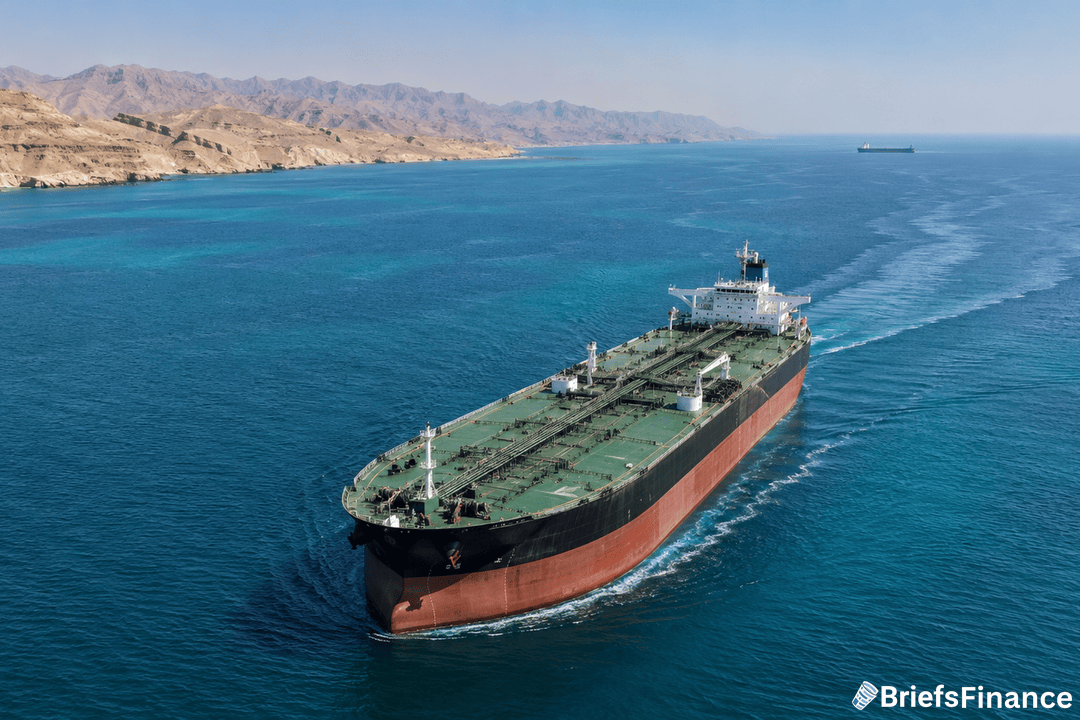
Iraq finally moved 14 million barrels of stranded crude oil out of the Persian Gulf in just 10 days. The 14 million barrels represent only a small portion of Iraq's typical monthly exports of about 100 million barrels before the hostilities began. The relief came after an uneasy US-Iran ceasefire eased transit through the Strait of Hormuz.
On February 28, 2026, the United States and Israel launched attacks against Iran. In response, Iran nearly closed the Strait of Hormuz - the narrow waterway that carries about 20% of global oil and gas. Hundreds of ships, including tankers loaded with Iraqi crude, were blocked inside the Gulf.
The trapped oil had been loaded at Iraq's Basrah terminal between late February and early March. Then in late June, an uneasy US-Iran ceasefire allowed transit to resume. Over those 10 days, roughly 14 million barrels moved out - an average of 1.4 million barrels per day.
Get your free investing masterclass bonus when you join Market Briefs, our free daily newsletter
Tanker-tracking data from Bloomberg shows that most of the vessels carried about 1 million barrels each. Some carried 2 million. Their destinations include India, the Philippines, Netherlands, Singapore, France, Greece, Malaysia, and the United States.
Despite this outflow, Iraq is still struggling. So far in June - as of the article date - only 6 million barrels of Iraqi crude have been loaded onto tankers. The country's storage is limited, and there is limited access to tankers. As a result, Iraq has been forced to cut its own production again.
The four-month blockade dealt a severe blow to Iraq's finances, as oil exports account for more than 90% of government revenue. With roughly 100 million barrels per month blocked from reaching international markets, Iraq lost billions of dollars in income. Even after the ceasefire, the slow pace of vessel availability and the limited onshore storage capacity means the country cannot immediately ramp up exports to pre-crisis levels. The 14 million barrels that finally transited the Strait of Hormuz in late June represent only a fraction of the backlog - and many more tankers remain stuck or are loading at reduced rates.
Iraq is now pressing OPEC for a larger production quota. The goal is to boost output and recover revenues lost during the Hormuz closure. But with limited storage and vessel availability, monthly exports remain far below pre-war levels.
Subscribe to Market Briefs, our free daily newsletter, and claim your bonus investing masterclass