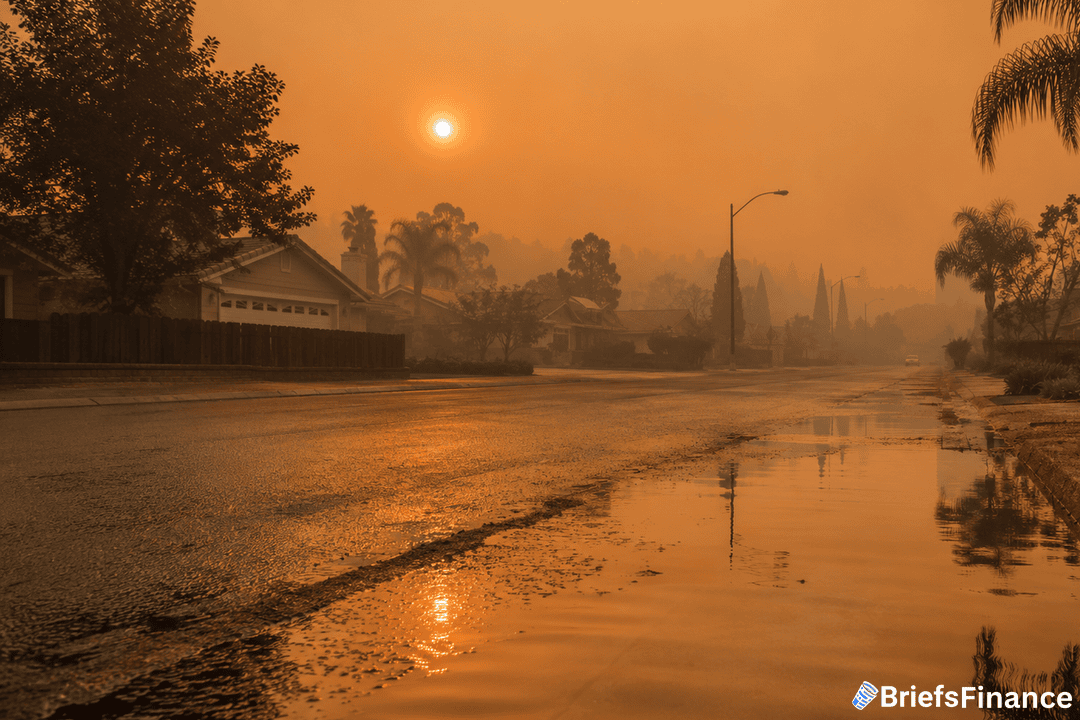
More than 178 million US residents are currently inhaling smoke-filled air, suffering from extreme heat, or dealing with severe floods. This figure represents over half the country, based on a July 17 report from Bloomberg.
Bob Oravec, a senior branch forecaster at the US Weather Prediction Center, reported that about 151 million people in regions stretching from the northern Rockies through the Mid-Atlantic and into the Gulf Coast experienced extreme heat on Friday. Canadian wildfire smoke, with a yellowish tint, spread across a large portion of the Northeast, Mid-Atlantic, and Midwest, degrading air quality for around 87 million Americans on Friday. Additionally, around 70 million people are enduring both smoke and heat at the same time.
About 10 million people in Texas were under flood watches Friday. In south-central Texas, at least two fatalities have occurred, and authorities in Hill Country have ordered mandatory evacuations. Additionally, the dry US West is also affected by strong gusts and wildfires.
Get the market news that matters in a five-minute read with Market Briefs, our free daily newsletter
Chicago's air quality is hazardous. Across the Northeast and Midwest, masks are once again a common sight this week. Postponements of athletic competitions and musical performances have occurred.
Jennifer Francis, a senior scientist at Woodwell Climate Research Center, stated that this week's extreme weather is driven by a highly persistent jet stream pattern, which is causing a heat dome, fires, and storms in Texas. "The impacts that we're seeing this summer are completely consistent with what we've been expecting to see for a long time now," she said.
With global warming, the likelihood of severe storms, droughts, and wildfires has increased. Human-induced warming has caused the atmosphere to retain more water vapor, resulting in devastating floods like the one that hit Texas last year. Simultaneously, heightened evaporation has caused extended dry periods, similar to droughts that affected the southwestern United States earlier in the 2000s.
These simultaneous weather events highlight the growing complexity of climate impacts, as a single jet stream pattern can trigger multiple hazards across different regions. The combination of heat, smoke, and floods in one week underscores the interconnected nature of extreme weather, which scientists say will become more common as the planet continues to warm.
Several scientists warn that these conditions are merely a preview of more extreme weather in future summers and winters, which will endanger commerce and people worldwide.
"It's very likely that we're going to see a lot more cases where you've got multiple types of extremes happening at the same time because they're all connected to this particular jet stream configuration," Francis said.
The extreme conditions in July join an expanding roster of severe weather worldwide this year, including scorching heatwaves in Europe and powerful super typhoons in the Pacific.
Join Market Briefs, our free daily newsletter, for a quick daily rundown of the markets