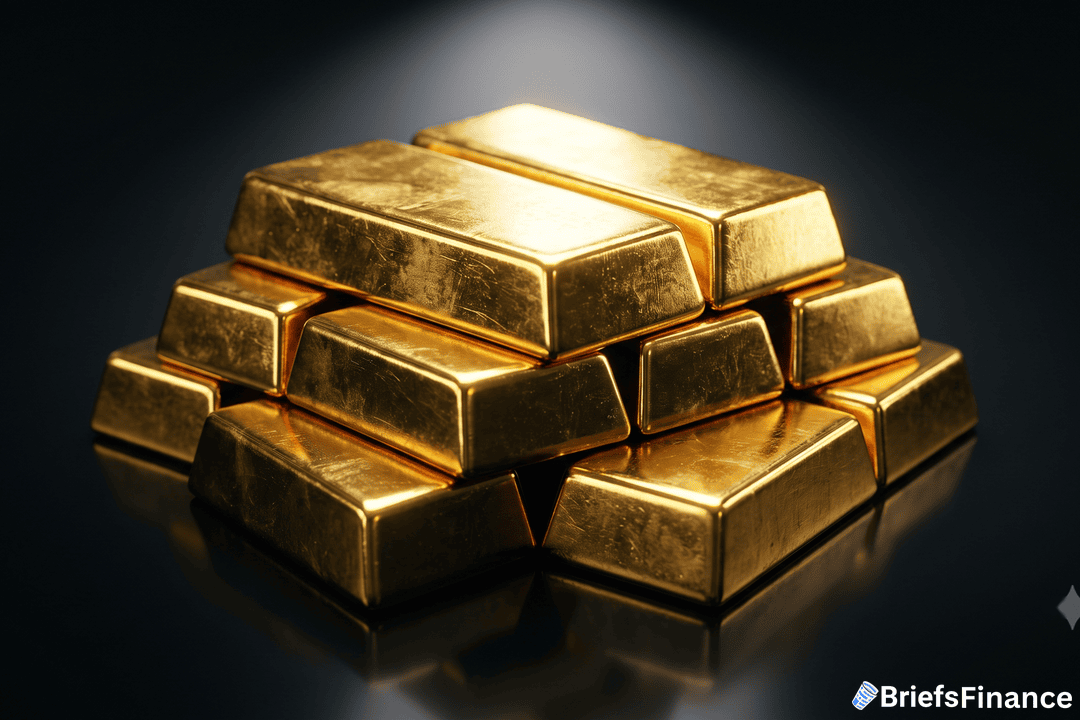
In recent weeks, the precious metal had been trading within a tight band near $4,000 per ounce. On Thursday, the United States conducted its fifth consecutive day of strikes on Iran, building on the previous night's attack that damaged an oil tanker close to the Islamic Republic's main export terminal. Oil held a big weekly advance.
Now in its fifth month, the fighting has pushed energy costs higher and stoked inflationary pressures. A Federal Reserve official recently remarked, "We have growing concerns about persistent inflation, and rate increases may be necessary in the near term." Such signals dampen demand for bullion that offers no yield.
Gold fell 2% the previous session. The Bloomberg Dollar Spot Index ended the previous session up 2%.
This decline highlights that gold's usual safe-haven status is currently outweighed by expectations of higher interest rates. Historically, crises in the Middle East have driven gold higher, but this time the accompanying surge in oil prices is stoking inflation fears that could prompt the Fed to act. The five-month conflict has already driven energy costs up by over 20%, adding to the broader inflationary pressures that central banks are struggling to contain.
Get the market news that matters in a five-minute read with Market Briefs, our free daily newsletter
In the second quarter, gold lost 14% of its value. That was its worst quarterly performance since 2013. The Middle East crisis, lasting five months now, has escalated energy costs and fueled fears of inflation.
Many Fed officials are increasingly alarmed by high inflation and have cautioned that the central bank may have to raise rates shortly, which undermines gold's appeal as a non-interest-bearing asset. Silver fell slightly, trading at $55.50 per ounce.
The five-month conflict has not only affected gold but also other commodities. The divergence between gold's drop and oil's rise underscores the unusual market dynamics at play. Typically, a surge in energy costs would boost gold as a hedge against inflation, but the prospect of rate hikes has outweighed that benefit.
The conflict between the U.S. and Iran has disrupted global energy supply chains, with repeated military exchanges pushing oil prices up over 20% since the start. This turbulence has created a unique environment where traditional safe-haven demand for gold is being overshadowed by the expectation of tighter monetary policy.
Gold's recent decline highlights its sensitivity to monetary policy expectations. When the Federal Reserve signals tighter policy, gold often suffers because higher rates increase the opportunity cost of holding the metal. The current surge in energy prices due to Middle East tensions has amplified inflation concerns, making a rate hike more probable.
In previous tightening cycles, the Fed's rate increases have triggered sharp selloffs in gold, as yield-bearing assets become more competitive. The current situation mirrors 2013, when gold slumped after the Fed signaled tapering of quantitative easing. Analysts point out that the prolonged Middle East crisis, now spanning five months, continues to sustain high energy prices.
This dynamic has kept gold under pressure despite geopolitical uncertainty, which typically boosts safe-haven demand. Investors are now watching for the Fed's next moves, as any further hawkish signals could extend gold's losses.
Join Market Briefs, our free daily newsletter, for a quick daily rundown of the markets