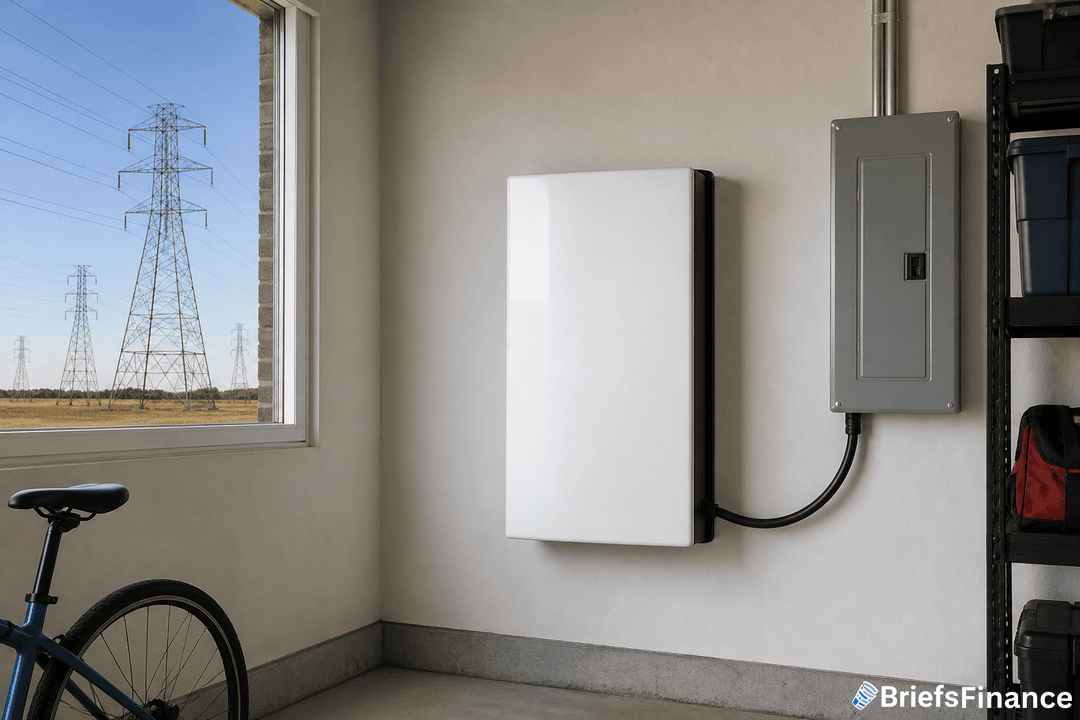
A typical home battery costs more than $10,000. That is a big pile of cash for something that mostly sits quietly in your garage.
Tesla, which turned the Powerwall into a household name, just changed that math.
In Texas, you can now get a 27 kWh Powerwall for $35 a month.
Base Power got there by raising $2 billion in under a year. That gives it room to compete hard on price, and the bigger battery at a smaller number is already turning the home battery into something you subscribe to instead of build.
Those low payments aren't charity. They come from a newer idea called a virtual power plant, or VPP.
Your power bill is not the only thing repricing. Join our CEO Jaspreet Singh on September 29th for a free workshop on how to profit from a dollar that is losing its value.
A VPP connects thousands of home batteries, water heaters, and other devices into a single resource that operates like one giant power plant. The utility can control them as a group, without building new large machinery.
It works with the grid quite well. The VPP company buys electricity at night when it's cheap, stores it in your battery, and sells it back during the hottest part of the day when power prices spike. Splitting the profit with homeowners lets the deal spread thin.
Utilities used to rely on peaker plants, which are natural gas burners that run only in high demand, or they can pay huge factories to cut back their power use. Both are slow and expensive. Connecting existing home batteries is faster than either option.
Here's the real speed. Base Power and a Texas group called CoServ are on track to build a 100-megawatt VPP, and Tim Pianta of Base Power said the work will fit under 12 months. A conventional power station typically requires two to four years to achieve that same output.
Tesla has already installed more than 6.7 gigawatt-hours of Powerwall capacity. Base Power is adding around 8 megawatt-hours every single day.
The next boost is likely to come from data centers. Cloud providers and AI platforms are opening new buildings fast, and they're hungry for electric connection.
Nicole Tomasin, who works on energy innovation, uses it simply. "They're not buying kilowatt-hours," she says. "They're buying interconnection."
That is why virtual plants are so valuable. They built a battery network in just months, isn't waiting in line for grid connection while a large new plant deals with queues that last years.
Greater demand, better prices, and more home batteries add up.
That means the price of actually having a battery is strong in coming down. For regular homeowners who don't have a huge solar array, you can almost get a working battery for less than a month of their phone plan. And if the battery you share with the grid, it takes a little bit of the reward back into your pocket.
That's an energy bill, and one that will only become more common.
Locking in a cheap monthly cost is one way to fight rising prices. See the rest with our CEO Jaspreet Singh on September 29th in his free workshop on how to profit from a dollar that is losing its value.