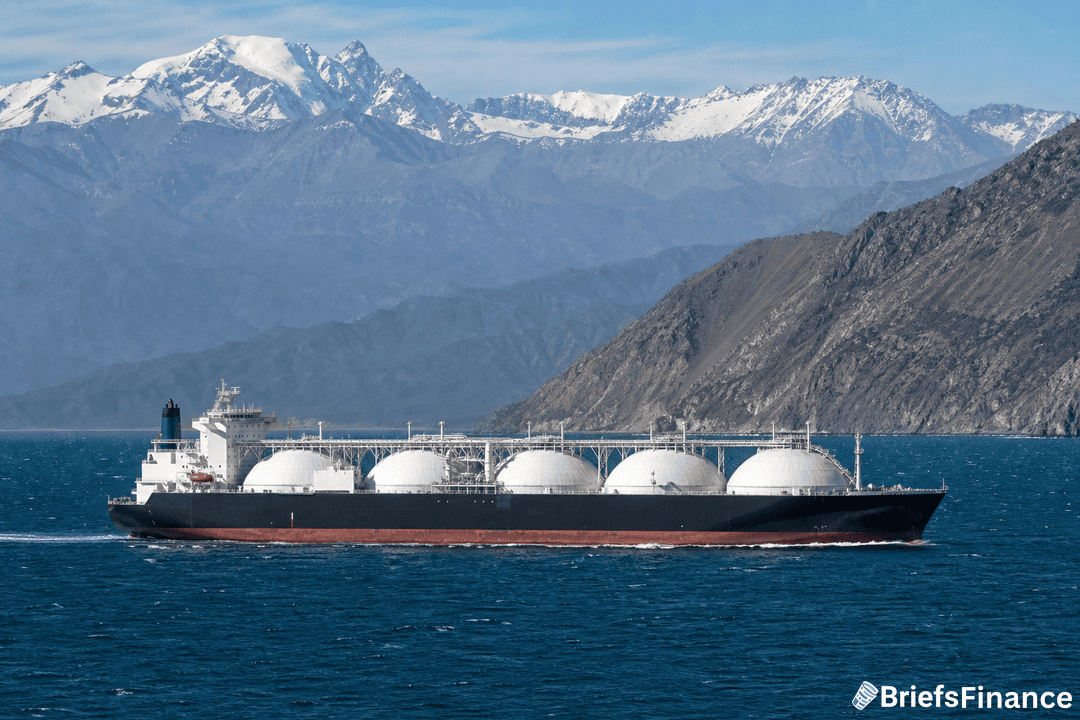
Instead of paying up, a growing number of exporters are trying something different. They are loading liquefied petroleum gas, or LPG, onto smaller ships that fit through the canal, then transferring the cargo to massive tankers waiting on the other side. Those big tankers never see the canal at all.
Chevron has chartered two of these giant ships, the Fritzi N and the Pacific Yantai, to pick up LPG at Balboa, a port on Panama's Pacific coast. The gas arrives on smaller ships that have already made the crossing. From there, the big tankers carry it across the Pacific to buyers in Asia.
The Panama Canal has served as a vital shortcut for energy shipments for decades. For U.S. LPG producers, the route to Asia is roughly 8,000 miles shorter than going around South America. That difference can mean millions of dollars in freight savings.
But when the canal slows down, those savings evaporate, and exporters must find alternatives. Ship-to-ship transfers are one such alternative, allowing larger vessels to avoid the canal's draft restrictions while still moving cargo efficiently. This practice has grown so common that some shipping analysts now call it the "Panama pivot."
When shippers dodge huge fees, you can too with the free Always Be Buying E-Book for steady wealth
The Panama Canal has always been a shortcut, but it has become a parking lot. A mix of war and weather is to blame. The Iran war has disrupted global shipping routes, while a strong El Niño has brought drought to Central America, lowering water levels in the canal's lakes. That means fewer ships can pass, and the queue backs up.
The congestion is not a new phenomenon, but it has worsened dramatically. The drought has been particularly severe, reducing the amount of water available for the lock system. The canal authority has had to limit daily transits to conserve water, and the backlog has grown.
Desperate shippers have even started trading reservation slots, paying a premium to jump the line. For those who show up without a booking, the price of immediate transit has skyrocketed.
The workaround is catching on. So far this year, about 60% of U.S. LPG exports have gone to Asia, up from 55% for all of 2025. The numbers keep climbing as exporters look for ways around the mess.
This is more than a shipping headache. LPG is used for cooking gas and in manufacturing, so when it costs more to move, those costs can trickle down. But the real story is how quickly markets adapt. When one door closes, someone builds a window.
As of August 20, 2026, the ship-to-ship shuffle was still a workaround, not a permanent fix. But it shows that even in the most tangled supply chains, there is always a way through. For anyone watching their portfolio, it is a reminder that congestion and fees are not the same as a dead end. They are just a reason to get creative.
Avoid the line at the canal and start your own mid-ocean handoff with the Always Be Buying E-Book now