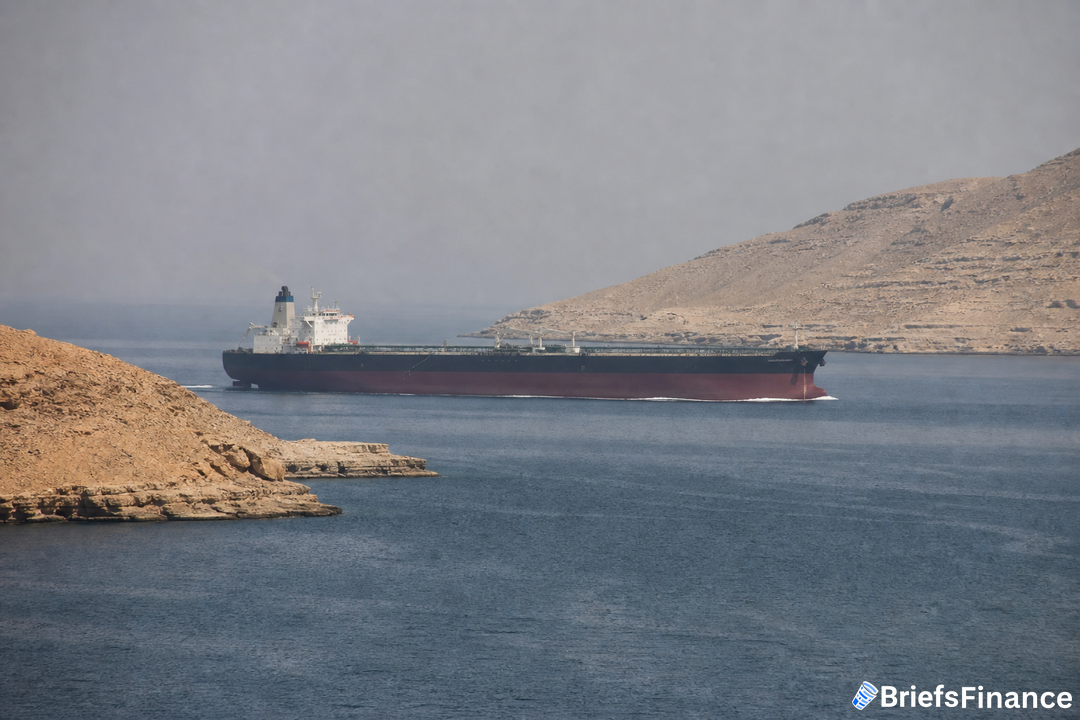
Crude is on track for the biggest weekly advance since July after a fresh burst of US-Iran hostilities refocused attention on a chokepoint that moves a large slice of global energy. Brent is up almost 60% in 2024, with refined fuels like diesel rising even faster. At 9:04 a.m. in Singapore, Brent for November delivery was 0.3% higher at $95.76, and WTI for October added 0.4% to $91.65.
Iranian forces kept targeting ships passing through Hormuz and also launched missiles at Jordan, Kuwait and Bahrain. Israel signaled it is ready to fight again if needed and said an Iranian attack would lift its current constraints, setting the stage for another round of escalation. "The risk premium can only be compressed for so long when the underlying security issue remains unresolved," said Priyanka Sachdeva of Phillip Nova in Singapore.
Vice President JD Vance downplayed the confrontation, saying he would not call it a war because major combat ended weeks ago. Representative Pat Harrigan, a North Carolina Republican on the House Armed Services Committee, countered that "very clearly militarily, we are stalled." Meanwhile, Brent edged toward $96 and WTI traded near $92 as traders reassessed the odds of supply interruptions through Hormuz.
Despite the unrest, some crude continues to move out of the Persian Gulf via Hormuz, with US officials citing solid flows. Saudi Arabia kept the official price of its main crude grade unchanged for next month, a hint that the squeeze in physical barrels may be easing. Before the Iran war, roughly one fifth of global oil and liquefied natural gas shipments passed through Hormuz.
This week, spot LNG prices in Asia jumped to their highest in more than three years, pressuring demand and government budgets in parts of the region. In oil products, US retail diesel hit the most expensive level since mid-2022, and European diesel inventories remain well below typical seasonal levels.
Even when headlines feel uncertain, staying consistent pays off, so download the free Always Be Buying E-Book to learn more
Energy markets are baking in a fatter risk premium as security worries collide with tight fuel supplies. Keep an eye on actual traffic through the Strait of Hormuz and on whether Saudi pricing shifts, because those clues tend to show up at the pump and in shipping, trucking and heating costs that ripple through everyday budgets.