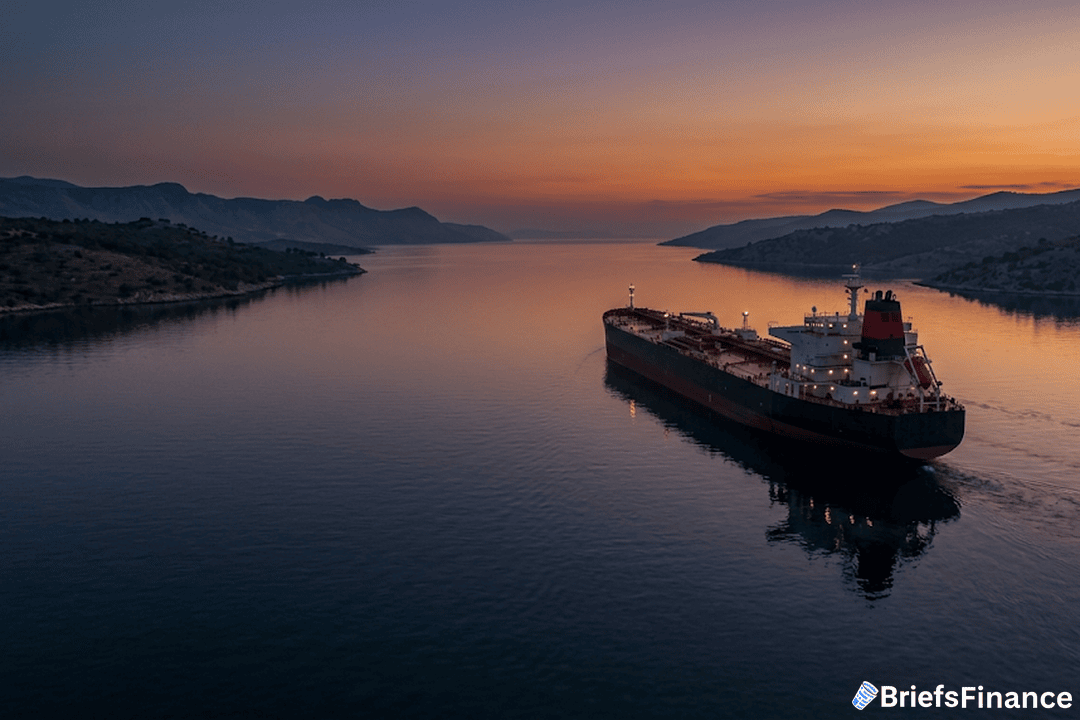
The world's most important oil chokepoint just got a lot more dangerous.
Iran has been targeting oil tankers in the Strait of Hormuz with increasing intensity. The International Maritime Organization reports that at least nine ships have been hit in strikes since July 6.
The result is plain in the traffic numbers. On Thursday, just eight ships crossed the Strait. The day before, it was 15.
For context, before the U.S. and Israel launched attacks on Iran on February 28, the Strait was seeing well over 100 transits a day. That is a collapse.
"It's open if people want to go through it," President Donald Trump said, referring to a U.S.-protected shipping lane. "We're not opening it for Iran. That's the only one it's closed for."
Get the market news that matters in a five-minute read with Market Briefs, our free daily newsletter
But the reality on the water is more complicated.
The attacks are not random. Iran wants to force tankers to move through Iranian territorial waters instead of a U.S.-protected route along Oman's coast.
On June 17, the U.S. and Iran reached a memorandum of understanding intended to restart traffic through the Strait. But the agreement never specified which shipping lanes counted as safe. So both sides are now competing to control the path ships take.
Iran hits vessels that use the American corridor, hoping to drive traffic its way. In response, the U.S. military via Central Command disabled an empty oil tanker on Wednesday, following the reinstatement of its naval blockade on Iran earlier this week.
Jakob Larsen, chief security officer at the shipping association BIMCO, warned that the situation is getting worse. "Unfortunately, it looks like we are on a path of escalation and the situation might well grow worse with time," he said. He also noted the risk of mines in the water. "If a mine detonates, typically that happens under the ship," Larsen said. "The mine is a very powerful weapon, so it's extremely dangerous for ships to run into a minefield."
Crews are deeply afraid, noted Marisks CEO Dimitris Maniatis. "We see the reduction of the volume of transits through the Strait of Hormuz and right now crews of vessels are even more concerned than they were before," he said. "Nobody is willing to move."
And that fear does not respond to money. "It's not about money anymore. It's not about any other higher calling," Maniatis said. "It's purely about the fear that is governing the decision making right now."
So where does that leave the situation?
Larsen noted that if shippers are convinced the U.S. has effectively reduced the danger from Tehran, transits might rise again. But that is a big if. Even if the companies agree to sail, the crews have to agree to board. "It also requires that the crew actually agree," Larsen said.
Shipping firms need reliable reassurances from both Iran and the U.S. on which routes are safe. Until those arrive, expect the Strait to stay mostly empty.
Join Market Briefs, our free daily newsletter, for a quick daily rundown of the markets