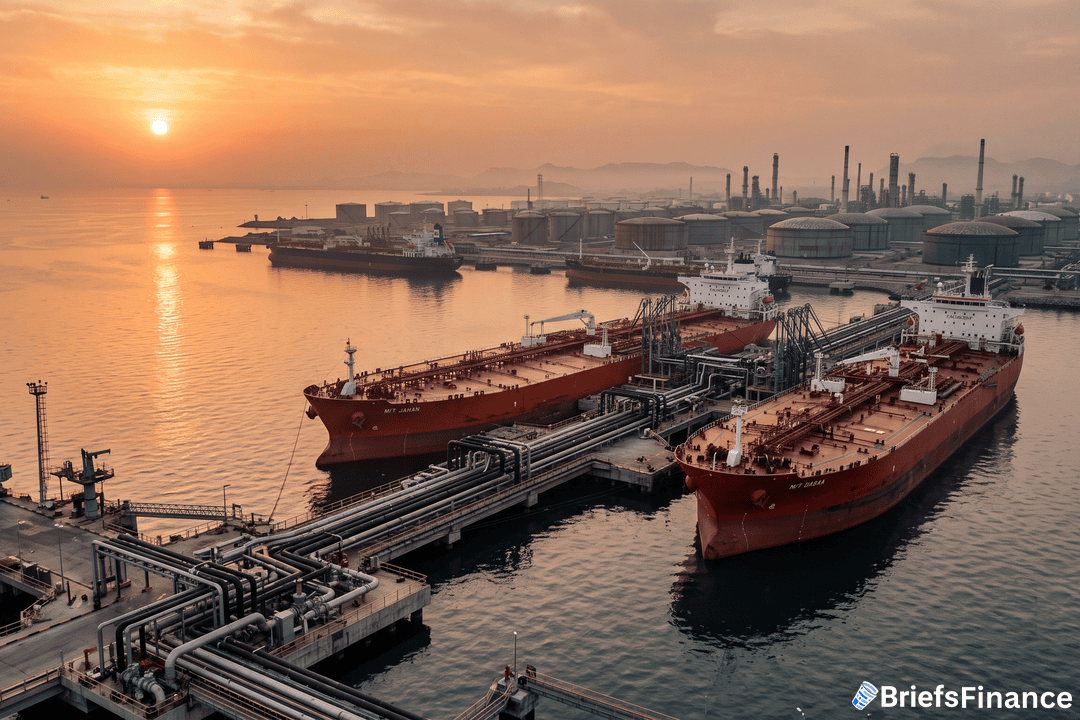
Iran is hastily loading crude oil onto tankers while the United States continues its military strikes for a second consecutive day. The move puts 11 million barrels onto the open sea - with no guarantee buyers will step forward. Tensions between the two countries are heating up again, threatening a fragile peace deal.
The 11 million barrels equals what Iran used to export in a single week before the current conflict.
President Donald Trump had threatened, "We will reimpose a blockade on Iranian ports," according to White House statements. These actions came after recent Iranian attacks on vessels. The military action threatens to undermine the already fragile ceasefire agreement between the two countries.
Most other visible shipping traffic through the Strait of Hormuz has come to a halt. The disruption is already pushing up prices.
Get the market news that matters in a five-minute read with Market Briefs, our free daily newsletter
Earlier this week, the United States revoked a waiver permitting Iran to export its crude. This left a huge volume of crude sitting on vessels without any confirmed buyers.
The Strait of Hormuz is a critical chokepoint for global oil shipments, and the near-total absence of non-Iranian traffic there signals a severe escalation in risk. Any direct confrontation between US naval forces and Iranian tankers could send insurance premiums soaring and further disrupt supply chains. The fragile ceasefire, already strained by tit-for-tat strikes, now faces its toughest test since it was brokered.
With Iran racing to move its oil before a potential blockade takes full effect, the coming days will determine whether these barrels reach customers or add to the millions already stranded at sea. The situation also pressures oil-importing nations that rely on the Persian Gulf, as alternative supplies from other regions may not fully compensate for a prolonged disruption.
Beyond immediate price spikes, the standoff threatens to reshape global trade patterns. Tanker owners are already reassessing their routes, and shipping firms may demand war-risk premiums that push freight costs higher. Oil-dependent economies from Asia to Europe now face the prospect of tighter supply just as winter demand approaches in the Northern Hemisphere. Even if a blockade is not fully enforced, the uncertainty alone could keep prices elevated and force importers to draw down strategic reserves more quickly than planned.
The fragile ceasefire between the US and Iran, brokered earlier this year, has been strained by recent tit-for-tat strikes. With both sides accusing each other of violations, the peace deal faces its most serious challenge since its inception.
Iran's rush to export oil shows it is trying to get ahead of a possible US blockade. But with the Strait of Hormuz nearly empty of other traffic, the risk of a confrontation at sea is growing. The next few days will reveal whether these tankers find buyers or become part of a growing backlog of unwanted Iranian oil.
Join Market Briefs, our free daily newsletter, for a quick daily rundown of the markets