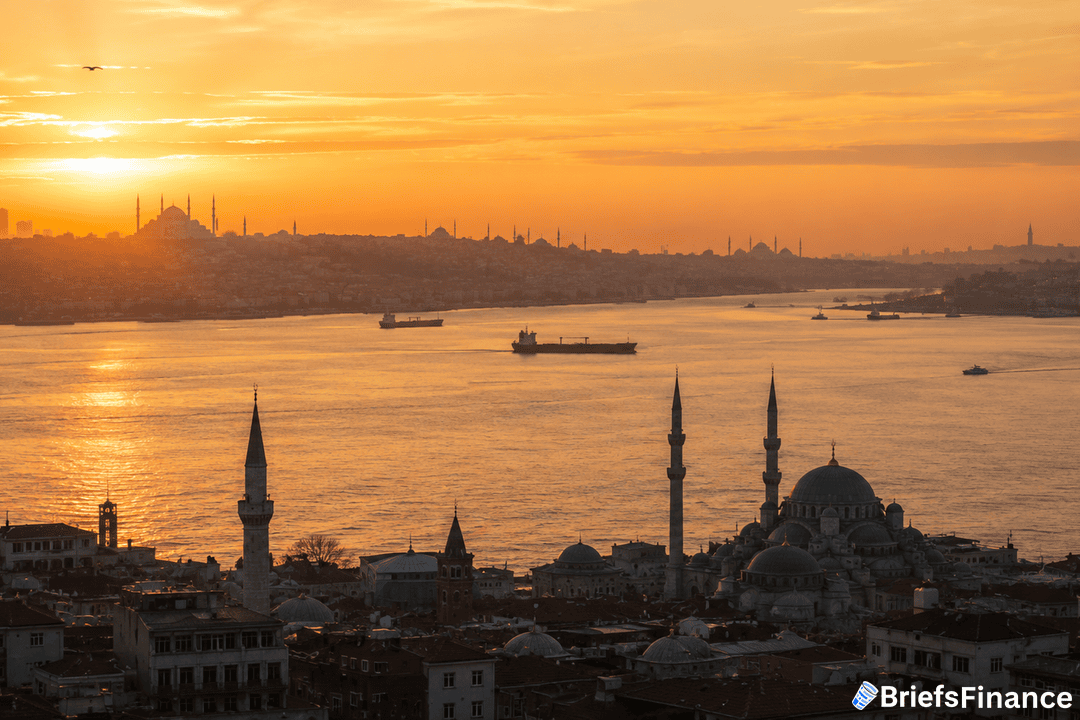
The two-month streak of rising inflation ended as Turkey, a major importer of oil and natural gas, faced surging energy costs following the near-total closure of the Strait of Hormuz.
On a monthly basis, prices rose 1%, also in line with expectations.
The Iran conflict, which erupted in early 2024, disrupted shipping through the Strait of Hormuz, a waterway that handles about 20% of the world's oil supply. For Turkey, which imports nearly all of its oil and gas, the resulting price surge pushed inflation from around 25% in March to over 33% in May. The easing in June reflects both a partial reopening of the strait and a decline in global crude prices as diplomatic talks resumed.
Get your free investing masterclass bonus when you join Market Briefs, our free daily newsletter
The conflict in Iran, which began earlier this year, led to the virtual closure of the Strait of Hormuz in April, a critical chokepoint for global oil shipments. As a major energy importer, Turkey felt the immediate impact, with fuel costs surging over 20% in the following two months. This pushed inflation sharply higher before the June slowdown, which was partly due to a recent drop in global oil prices as tensions eased somewhat.
Central bank officials have faced growing demands from businesses and lenders to speed up disinflation. The central bank paused its series of rate reductions in March and effectively tightened policy by adopting a more expensive funding mechanism, aiming to curb the spillover from energy‑driven inflation. Since then, the central bank has been lending to banks at 40% instead of its benchmark policy rate of 37%.
Governor Fatih Karahan told investors in London last month, "We do not plan to move funding back to 37% before our next policy decision," as reported by Bloomberg. Nevertheless, some bankers and economists anticipate a cut in the funding rate at the July meeting, citing lower oil prices, though the central bank remains cautious.
Because Turkey relies heavily on foreign energy sources, geopolitical disruptions like the Strait of Hormuz closure hit its economy especially hard. The closure of the Strait of Hormuz, a critical passage for global oil shipments, caused a sharp spike in energy costs that filtered through the economy. While June's data provides some relief, policymakers remain vigilant against persistent inflationary pressures.
According to Haluk Burumcekci, who heads Burumcekci Research and Consulting, the central bank is likely to hold its policy rate and rate corridor steady at the July 23 meeting, with potential easing later. "The central bank can restart funding from weekly repo at 37% after the meeting," Burumcekci said. "We see very limited room for rate cuts in the remainder of the year with 2‑3 percentage points."
Bloomberg Economics' Selva Bahar Baziki noted that most forecasters expect inflation to end the year just below 30%, a gloomier view than the central bank's own 26% projection.
Subscribe to Market Briefs, our free daily newsletter, and claim your bonus investing masterclass