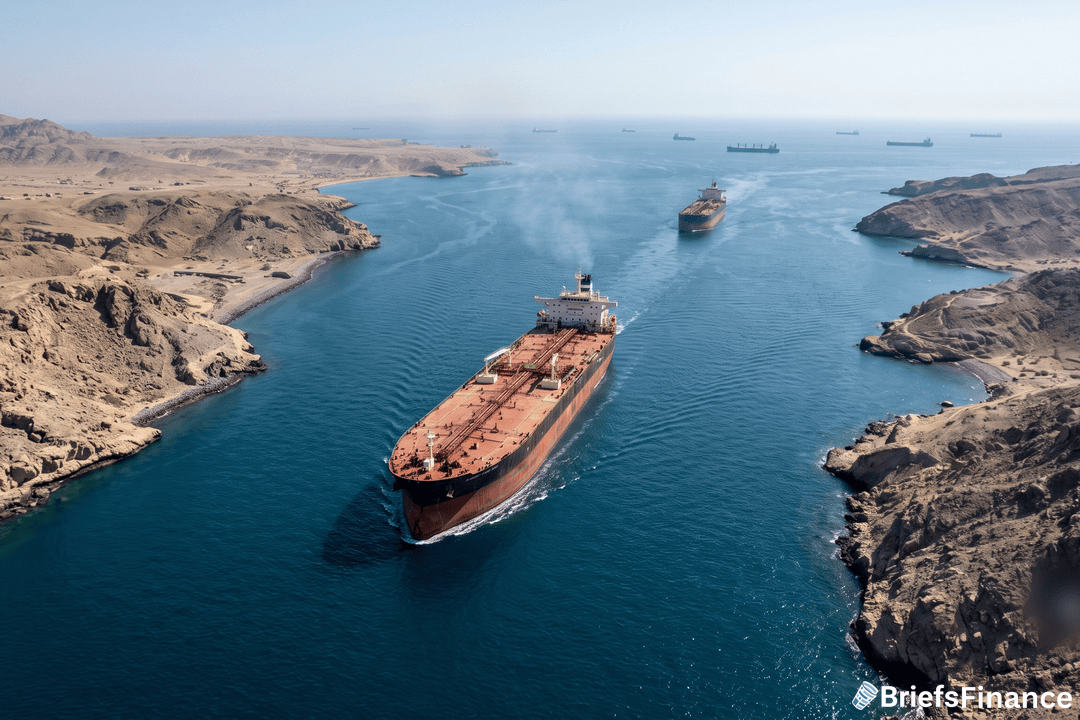
Despite ongoing regional tensions, the Strait of Hormuz remains fully operational for tanker traffic. Tankers continue to move through the narrow waterway every day. Yet a fresh round of regional tensions was enough to push oil prices up by $5 in a single day. No blockade happened - just fear of one.
The $5 price surge on June 12-13, 2025, though modest by historical standards, highlights the persistent risk premium attached to this waterway.
That volume has been shrinking. Between 2022 and 2024, crude oil and condensate flows through the strait fell by 1.6 million barrels per day.
Get your free investing masterclass bonus when you join Market Briefs, our free daily newsletter
Part of that decline came from voluntary production cuts by OPEC+, a group of major oil‑producing countries that started cutting output in November 2022. Disruptions at another chokepoint, the Bab al‑Mandeb strait near Yemen, also slowed some shipments. At the same time, Persian Gulf countries built more refineries at home and consumed more oil locally.
Petroleum product cargoes - like gasoline and diesel - went the opposite way. They increased by 0.5 million barrels per day over the same two‑year period.
The shift from crude to petroleum product shipments highlights a structural change in regional oil trade. Persian Gulf nations are investing heavily in domestic refining capacity to capture more value from their crude, which reduces the volume of raw crude exports through the strait. This trend could continue as additional refineries come online, potentially lessening the waterway's importance for crude while increasing it for refined products.
None of them can replace the waterway. The vast majority of oil moving through the strait cannot be rerouted via other paths, even though a few pipeline options exist to bypass the waterway. During 2024, Aramco, the state‑owned Saudi oil giant, redirected some of its crude that had been shipped via the Strait of Hormuz to instead travel overland through its East‑West pipeline to Red Sea ports.
The recent price jump, though modest, underscores how quickly tensions near the Strait of Hormuz can affect global oil markets. Historical episodes, such as the 2019 attacks on Saudi Aramco facilities and the 2020 U.S.-Iran tensions, have demonstrated that even the threat of disruption can send prices soaring. Meanwhile, OPEC+ production cuts and disruptions at the Bab al‑Mandeb strait have already reduced crude flows through the region.
The shift toward domestic refining in Persian Gulf countries is gradually altering the composition of cargoes, but the waterway's strategic importance remains high. Any further escalation could have outsized effects on global energy supplies.
Subscribe to Market Briefs, our free daily newsletter, and claim your bonus investing masterclass