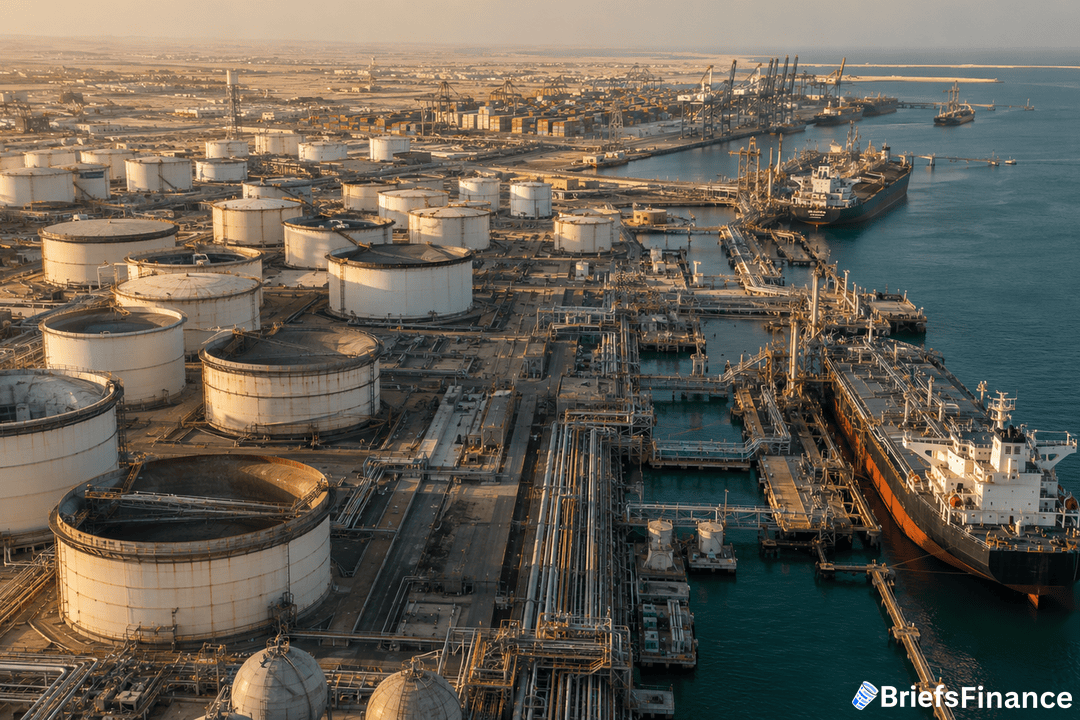
The Strait of Hormuz is like a highway that suddenly became unreliable. The UAE built a back road: a pipeline that carries crude to its east-coast port of Fujairah, outside the strait. That alone wasn't enough.
The country also sent tankers through the strait with their transponders turned off - so‑called "dark" transits - to avoid detection. And it used its own fleet to transfer oil to other vessels in the Gulf of Oman.
Get your free investing masterclass bonus when you join Market Briefs, our free daily newsletter
These moves allowed the UAE to keep shipping even while fighting raged nearby. Regional oil flows have recovered to about 75% of pre-war levels.
The UAE quit OPEC in May 2026 - just before this export surge. That means it is no longer bound by the group's production limits. Traders are now watching just how much crude the country is able to deliver without those quotas in place. The country has already shown it can ramp up quickly when it needs to.
Meanwhile, crude prices sank toward $71 a barrel in London on Wednesday, July 1. That is down from earlier peaks. Goldman Sachs predicted that the global oil market would revert to a surplus, with supply exceeding demand, as the war's effects diminish. Additionally, a fragile peace deal between the two warring sides in the Iran war has contributed to the price decline.
The big question is whether the UAE keeps pumping at these high rates now that it is free from OPEC quotas. If it does, that surplus could grow. And if the peace accord holds, more tankers will return to normal routes. The next few months will tell us if it can hold them.
The UAE's ability to maintain export volumes during the conflict underscores its strategic investments in alternative infrastructure. The Habshan-Fujairah pipeline proved critical, and the country's fleet of tankers capable of dark transits allowed it to circumvent the bottleneck. With OPEC discipline no longer a constraint, traders are closely watching whether the UAE will continue to push output higher.
Grab our complimentary investing masterclass to understand energy markets better.
Subscribe to Market Briefs, our free daily newsletter, and claim your bonus investing masterclass